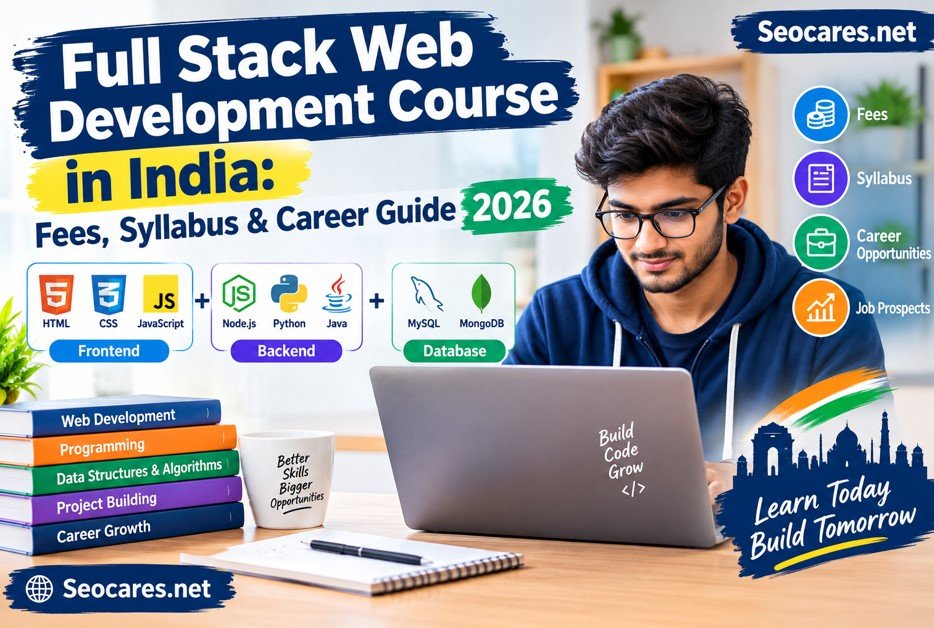
Every year, thousands of students in India search for a way into tech without spending four more years in a classroom. A full stack web development course has become the fastest route for many of them, and the reason is simple. Companies today don’t just want a coder. They want someone who can build the front end, wire up the back end, and understand how data moves between the two.
This guide breaks down what a full stack course actually teaches, how long it takes, what it costs, and how to pick one that won’t waste your time or money. No hype, no jargon dump. Just the information you need to make a smart decision.
What Is Full Stack Web Development?
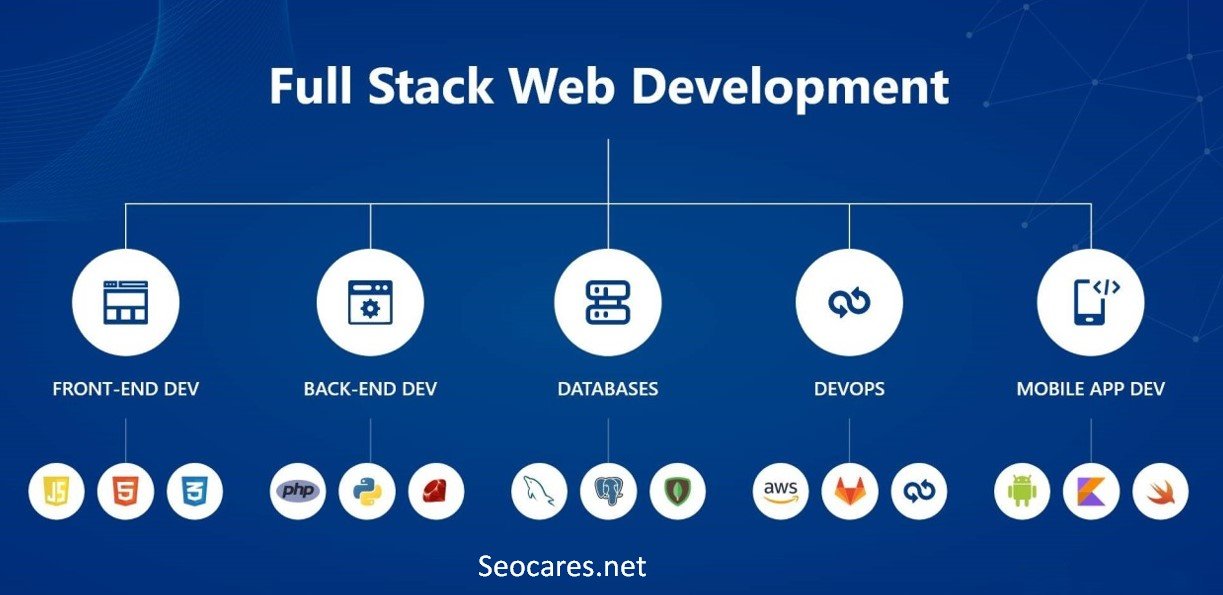
Full stack development means building both sides of a website or web application. The front end is what a user sees and clicks on: buttons, forms, layouts, colors, and animations. The back end is the hidden machinery: servers, databases, and the logic that decides what happens when a user submits a form or logs in.
A full stack developer handles both sides. This person can design a login page, write the code that checks a password against a database, and make sure the whole thing loads fast on a mobile phone in a low-network area.
This is different from a specialist. A front-end developer only touches what users see. A back-end developer only manages servers and data. A full stack developer moves between both worlds, which makes them useful for small teams and startups that can’t afford to hire five separate specialists.
Why This Course Matters in 2026
The job market has shifted. Startups and mid-size companies now prefer developers who can own an entire feature from start to finish, rather than waiting on three different teams to coordinate. This shift has made full stack skills one of the most requested qualifications on Indian job portals.
There’s also a practical reason this course is popular among career switchers. Unlike a computer science degree, a full stack course is short, focused, and built around actual hiring requirements rather than theoretical computer science topics. Someone with a commerce or arts background can realistically become job-ready in six to nine months.
Freelancing has added another layer of demand. Small businesses across India need websites and web apps but can’t afford large development agencies. A single full stack developer can build, deploy, and maintain a complete product, which makes the skill set attractive for freelancers and solo entrepreneurs too.
What You Will Actually Learn
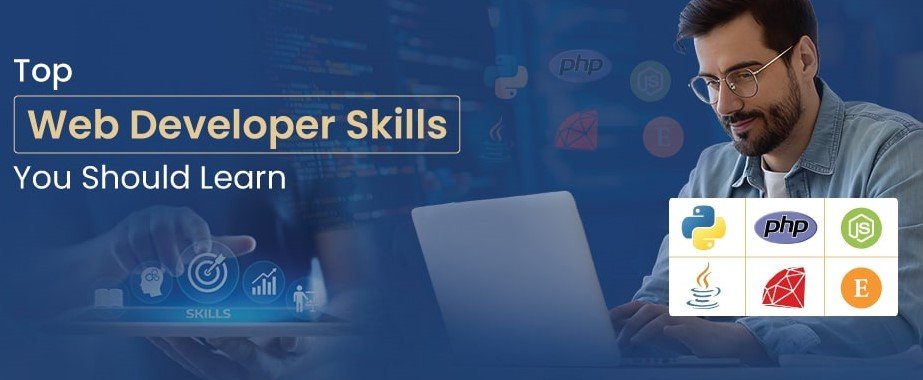
A well-designed full stack course is organized in layers, moving from basics to advanced project work. Here’s what most quality programs cover.
Front-End Fundamentals
- HTML and CSS for page structure and styling
- JavaScript for interactivity and logic
- Responsive design so pages work on any screen size
- A modern framework like React or Vue, since most companies now build interfaces using component-based frameworks rather than plain JavaScript
Back-End Fundamentals
- A server-side language such as Node.js, Python, or Java
- REST APIs, which allow the front end and back end to communicate
- Authentication and authorization, covering how login systems and user permissions work
Databases
- SQL databases like MySQL or PostgreSQL for structured data
- NoSQL databases like MongoDB for flexible, document-based data
- Basic database design, including how to avoid duplicate or messy data
Version Control and Deployment
- Git and GitHub for tracking code changes and collaborating with others
- Basic cloud deployment using platforms like Vercel, Netlify, or AWS
- An introduction to CI/CD, the automated process that tests and publishes code changes
Soft Skills That Get Overlooked
Technical skill alone doesn’t get someone hired. The strongest programs also build:
- Problem-solving through daily coding challenges
- Reading and debugging someone else’s code
- Explaining technical decisions in plain language during interviews
Course Duration and Format Options
 Full stack courses in India generally fall into three formats, and the right one depends on your current schedule and how fast you need to start job hunting.
Self-paced online courses usually take 4 to 8 months if you study consistently, since there’s no fixed batch schedule holding you accountable.
Instructor-led bootcamps are more intense, often running 3 to 6 months full-time or 6 to 9 months part-time, with live classes, assignments, and deadlines.
University certificate programs, often run alongside colleges, tend to stretch to 9 to 12 months and include more theoretical computer science content.
Most working professionals choose part-time bootcamps or self-paced formats so they can continue their current job while learning in the evenings or on weekends.
Full Stack Course Fees in India
Pricing varies widely depending on the platform, live support, and placement assistance included. As a general guide:
- Free resources (YouTube, freeCodeCamp): ₹0, but no structure or mentorship
- Budget online courses: ₹5,000 to ₹25,000
- Mid-range bootcamps with mentorship: ₹40,000 to ₹1,00,000
- Premium bootcamps with placement guarantees: ₹1,50,000 to ₹4,00,000+
A higher fee doesn’t automatically mean better quality. Some of the most respected developers in the industry are self-taught using free resources combined with strong project work. What matters more than price is whether the course includes real project building, code reviews, and some form of mentorship or community support.
Top Places to Learn Full Stack Development
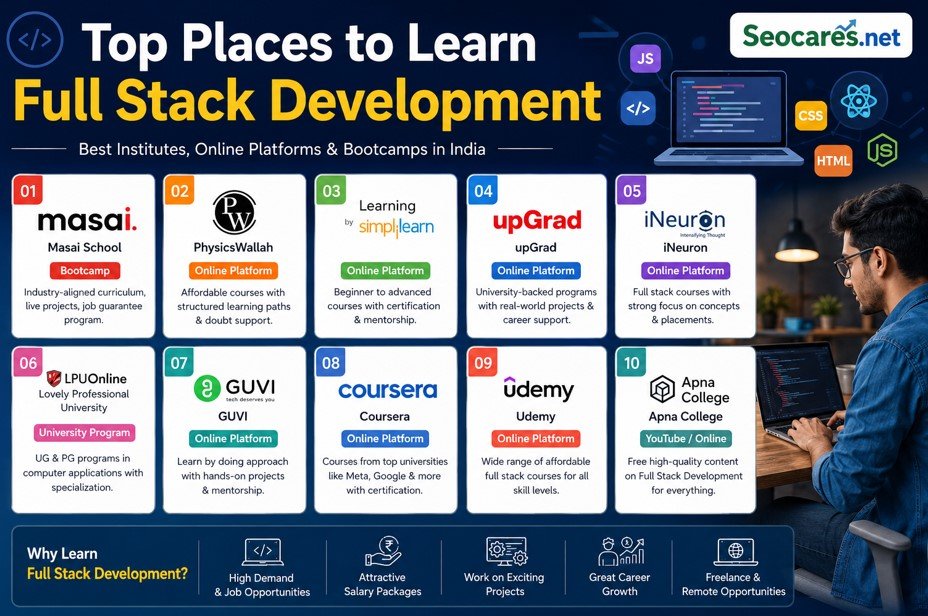
There is no single “best” platform for everyone, since the right choice depends on your budget, learning style, and how much structure you need. Here are categories worth researching directly:
- Bootcamp-style platforms that focus on job placement and offer live mentorship
- Self-paced platforms with structured video courses and community forums
- University-affiliated programs that combine academic credibility with placement support
- Free platforms for those who want to test their interest before spending money
Always check three things before enrolling anywhere: recent student reviews (not just testimonials on the website), the actual curriculum syllabus, and whether the instructors have real industry experience rather than only teaching experience.
Comparison Table: Course Formats
| Format | Typical Duration | Cost Range | Best For |
| Free self-study | 6–12 months | ₹0 | Highly self-disciplined learners |
| Paid online course | 4–8 months | ₹5,000–₹25,000 | Budget-conscious learners who want structure |
| Live bootcamp (part-time) | 6–9 months | ₹40,000–₹1,00,000 | Working professionals switching careers |
| Live bootcamp (full-time) | 3–6 months | ₹1,00,000–₹4,00,000+ | Fast career switchers who can study full-time |
| University certificate | 9–12 months | ₹50,000–₹2,00,000 | Learners who want academic credibility |
Pros and Cons of Full Stack Courses
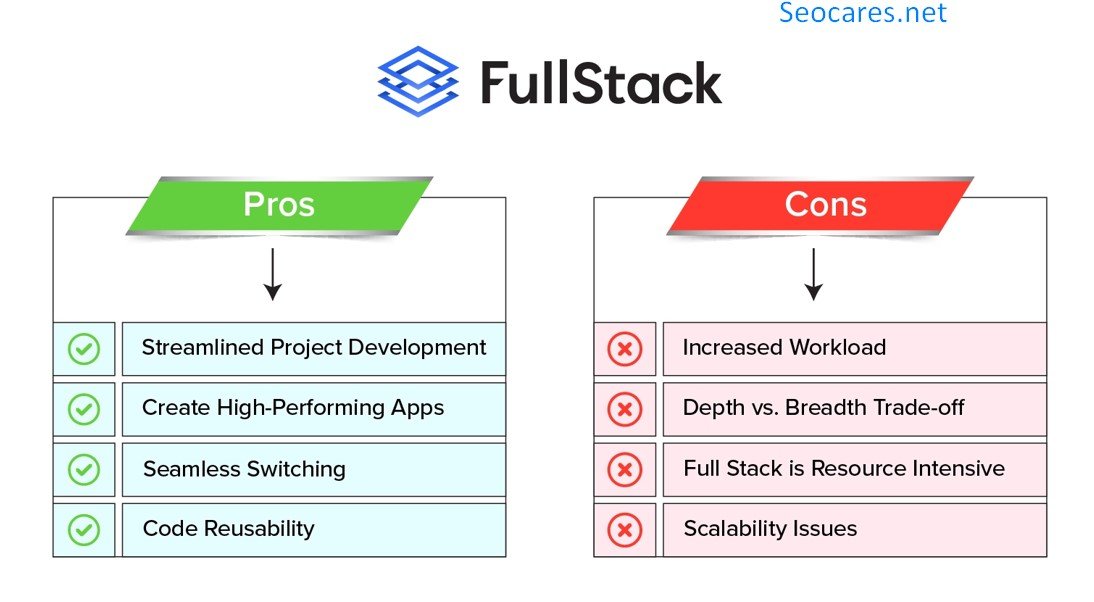
Understanding the trade-offs helps set realistic expectations before you commit time and money.
Pros:
- Job-ready skills in months, not years
- Ability to build complete projects independently, which is great for freelancing
- High demand across startups, agencies, and product companies
- Flexible formats that fit around a job or college schedule
- Strong foundation for future specialization in AI, mobile apps, or DevOps
Cons:
- Full stack roles require broad knowledge, which can feel less deep than a specialized front-end or back-end role
- Rapidly changing tools mean continuous learning doesn’t stop after the course
- Some bootcamps overpromise on placement guarantees
- Self-paced courses require strong self-discipline, and many learners drop off halfway
Career Scope and Salary After the Course

Full stack developers are hired across almost every industry that has a digital presence, including e-commerce, fintech, edtech, healthcare platforms, and SaaS companies. Common job titles include Full Stack Developer, Software Engineer, and Web Application Developer.
Entry-level salaries in India typically start in the ₹3.5 to ₹6 LPA range, depending on the city, the hiring company’s size, and the strength of your portfolio. With two to three years of experience, this can rise to ₹8 to ₹15 LPA, and senior full stack engineers at product companies often cross ₹20 LPA.
Freelance full stack developers charge per project or hourly, and rates vary based on complexity, but a solid portfolio with a few live projects can attract steady client work even without a formal job.
The strongest predictor of a good salary isn’t the course certificate itself. It’s the quality of your portfolio projects, your ability to explain your code in interviews, and whether you’ve contributed to any open-source or freelance work during the course.
How to Choose the Right Course
Before enrolling, run through this checklist:
- Check the curriculum depth. Does it cover both a modern front-end framework and a real back-end language, or just the basics?
- Look for project-based learning. Courses built around real projects teach retention far better than video-only lectures.
- Verify instructor credibility. Search their name or LinkedIn to confirm real industry experience.
- Read independent reviews. Check platforms like Reddit, Quora, or YouTube reviews rather than only testimonials on the course website.
- Ask about placement support specifics. A vague “placement assistance” claim means less than a clear description of resume reviews, mock interviews, or hiring partner details.
- Confirm the tech stack is current. Avoid courses still teaching outdated tools with no updates in the last two years.
Frequently Asked Questions
1. Is a full stack web development course worth it in 2026?
Yes, for most career switchers and beginners it remains one of the fastest paths into a tech job, provided the course includes strong project work and not just video lectures.
2. Do I need a coding background to join a full stack course?
No. Most beginner-friendly courses start from the basics of HTML and CSS, so no prior coding experience is required.
3. How long does it take to become job-ready?
Most learners become job-ready in 4 to 9 months, depending on the course format and how consistently they practice outside class hours.
4. Which is better: free resources or a paid bootcamp?
Free resources work well for highly disciplined, self-motivated learners. Paid bootcamps suit those who need structure, mentorship, and accountability to stay consistent.
5. What programming languages should I learn first?
Start with HTML, CSS, and JavaScript for the front end, then move to a back-end language like Node.js or Python once the basics feel comfortable.
6. Can I get a job without a computer science degree?
Yes. Many companies now hire based on demonstrated skills and portfolio projects rather than formal degrees, especially at startups and product companies.
7. What is the average salary after completing the course?
Entry-level salaries typically range from ₹3.5 to ₹6 LPA in India, rising significantly with experience and a strong project portfolio.
8. Should I learn MERN, MEAN, or another stack?
MERN (MongoDB, Express, React, Node.js) is currently the most in-demand stack in India due to high hiring demand and strong community support, but any modern stack learned deeply is valuable.
9. Is full stack development still relevant with AI tools growing?
Yes. AI tools speed up coding but still require a developer who understands the logic, architecture, and debugging behind the code, which is exactly what these courses teach.
10. How do I build a portfolio during the course?
Build 3 to 5 complete projects that solve real problems, such as an e-commerce site or a booking app, and deploy them live so employers can interact with your work directly.
Conclusion
A full stack web development course is one of the most practical ways to enter the tech industry without years of formal education. The right course depends less on brand names and more on curriculum depth, project work, and mentorship quality.
Focus on building real, deployable projects rather than just collecting certificates. Employers hire based on what you can build, not just what you’ve studied. Start with the fundamentals, stay consistent, and let your portfolio do the talking when it’s time to apply for your first role.