Have you ever typed a question into Google and wondered how it found the perfect answer in less than a second? That’s not luck. It’s SEO at work.
Search engine optimization is one of the most talked-about terms in digital marketing, yet many people still don’t fully understand what it means or why it matters. If you own a website, run a blog, or manage a small business online, understanding SEO can change how many people find you.
This guide breaks down what SEO is, how it works, and why it remains one of the most valuable skills for anyone building a presence online. No jargon. No fluff. Just clear, practical information you can actually use.
Read More: Seo cares
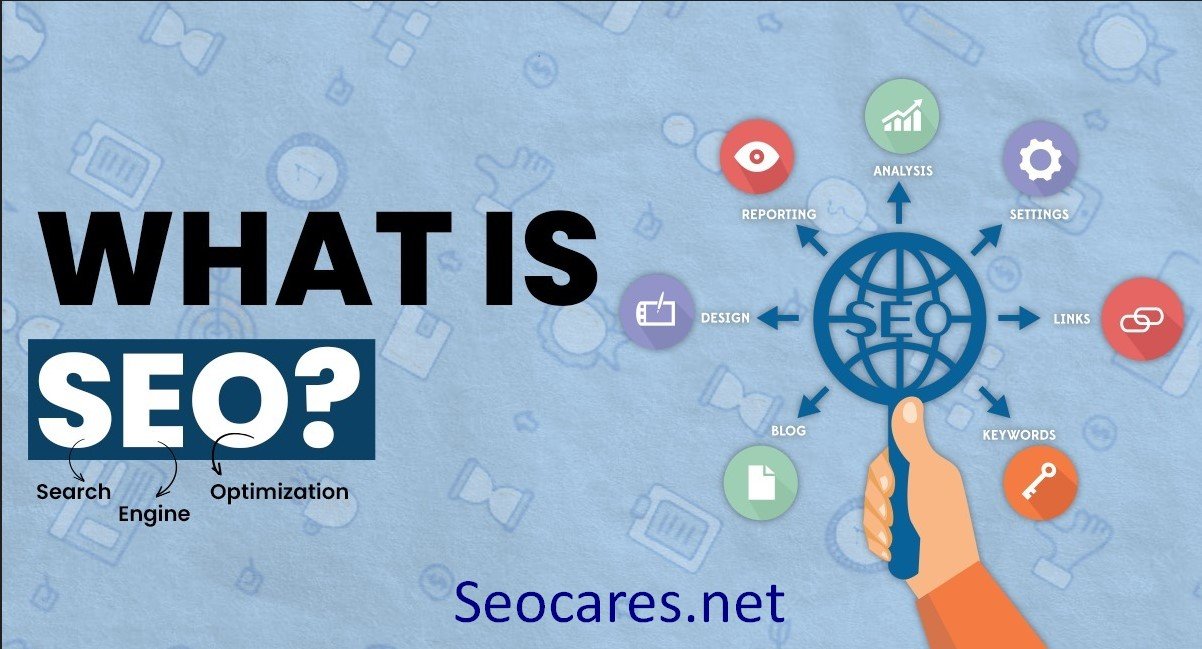
What Is SEO? A Simple Definition
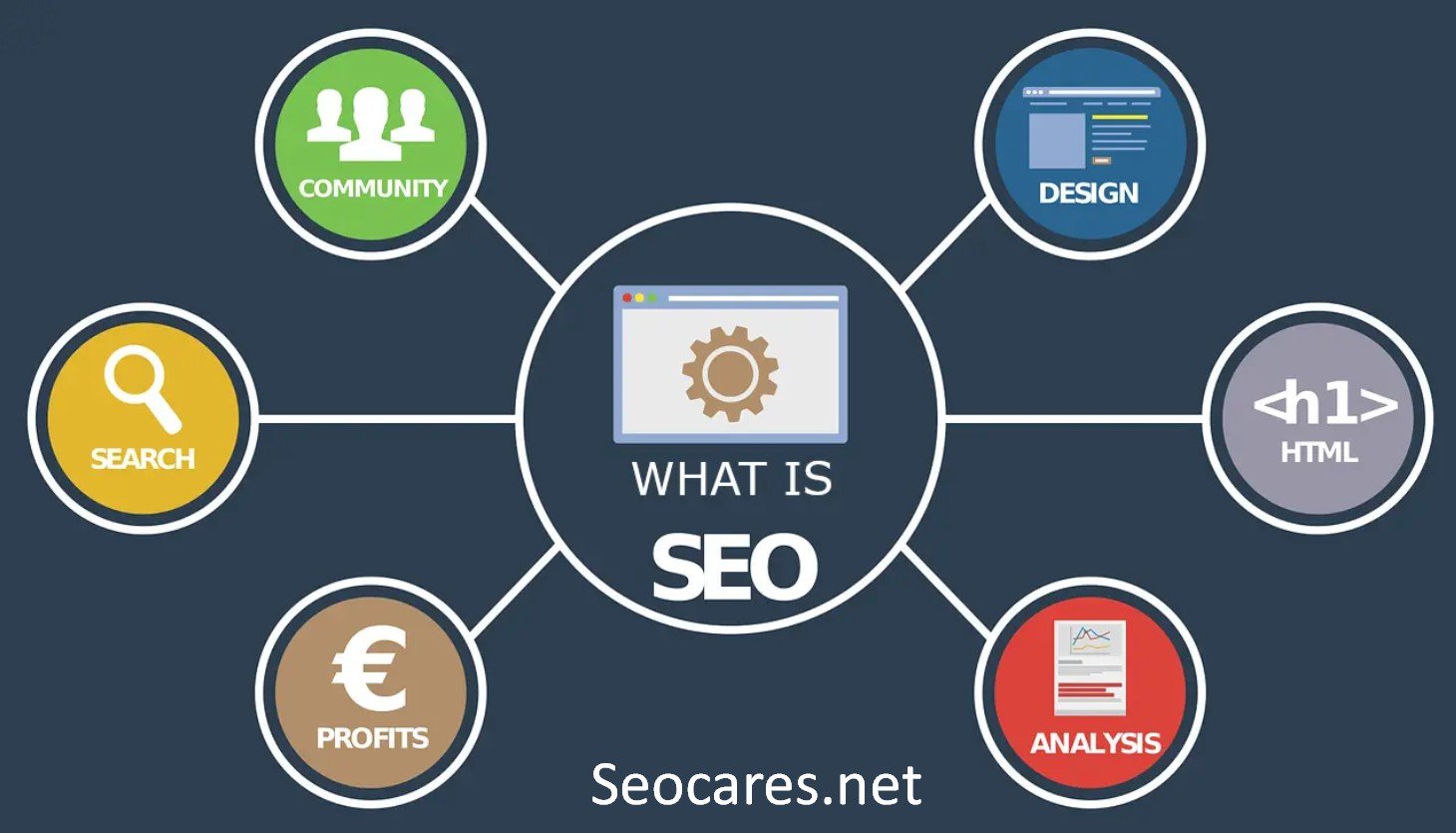
SEO stands for Search Engine Optimization. It’s the practice of improving a website so that search engines like Google, Bing, and Yahoo show it higher in search results.
Think of SEO as a set of techniques that help search engines understand what your content is about and why it deserves to be shown to people searching for related topics.
When someone searches “best running shoes” or “how to bake bread,” search engines scan millions of web pages and rank them based on relevance, quality, and trustworthiness. SEO is how you influence that ranking process in your favor.
In short, SEO helps your website get found by the right people at the right time, without paying for ads.
How Does SEO Actually Work?
Search engines use automated programs called crawlers or bots to scan the internet. These bots visit websites, read their content, and store information about each page in a massive database called an index.
Here’s the basic process in three steps:
1. Crawling
Search engine bots discover new and updated pages by following links across the web. This is how Google finds your website in the first place.
2. Indexing
Once a page is crawled, the search engine analyzes its content, images, and structure, then stores it in its index. If a page isn’t indexed, it can’t appear in search results at all.
3. Ranking
When someone types a search query, the search engine scans its index and ranks the most relevant, high-quality pages at the top. This ranking is based on hundreds of factors, which we’ll cover shortly.
SEO influences all three stages. It helps search engines crawl your site efficiently, index it correctly, and rank it favorably for relevant searches.
It’s worth understanding that search engines don’t rank websites as a whole. They rank individual pages. That’s why a single site can have some pages ranking on page one of Google while others don’t rank at all. Each page needs its own optimization, its own relevant content, and its own signals of quality.
Search engines also rely on algorithms, which are complex sets of rules and mathematical calculations that decide how pages are scored and ordered. Google alone updates its algorithm thousands of times a year, though most changes are minor. A handful of major updates, sometimes called “core updates,” can significantly reshuffle rankings across entire industries. This is why SEO is never a “set it and forget it” task. It requires ongoing attention.
Read More: SEO Tips
Why SEO Matters for Every Website

Some people assume SEO is only for big companies. That’s a myth. Here’s why SEO matters no matter the size of your website:
- Free, long-term traffic. Unlike ads, organic traffic from SEO doesn’t stop the moment you stop paying.
- Builds trust and credibility. Websites that rank higher are often perceived as more trustworthy by users.
- Better user experience. Good SEO practices also improve site speed, mobile usability, and content clarity.
- Higher conversion potential. People searching for something specific are often ready to buy, sign up, or take action.
- Competitive advantage. If your competitors rank higher, they capture the traffic and customers you’re missing out on.
Most online experiences start with a search engine. If your website isn’t optimized, you’re invisible to a huge share of potential visitors.
Consider this: studies on search behavior consistently show that the majority of clicks go to results on the first page, and a large share of those clicks go to the top three listings. If your page sits on page two or beyond, most searchers will never see it at all. That’s the real cost of ignoring SEO. It’s not just a missed opportunity; it’s a silent one, since you rarely know how many customers never found you in the first place.
SEO also compounds over time. A blog post you optimize today can keep bringing in visitors for years, unlike a paid ad that stops the moment your budget runs out. This makes SEO one of the few marketing channels where past effort continues to pay dividends long after the work is done.
Click Now: SEO Agency Interamplify
The Main Types of SEO
SEO isn’t a single strategy. It’s a combination of different techniques working together.
On-Page SEO
This refers to everything you control directly on your website, including:
- Title tags and meta descriptions
- Header tags (H1, H2, H3)
- Keyword usage and placement
- Content quality and readability
- Internal linking structure
- Image optimization (alt text, file size)
Off-Page SEO
This involves actions taken outside your website to boost its authority, such as:
- Earning backlinks from reputable websites
- Social media mentions and shares
- Guest posting on relevant blogs
- Online reviews and brand mentions
Technical SEO
This focuses on the backend structure of your website, including:
- Site speed and Core Web Vitals
- Mobile-friendliness
- Secure HTTPS connection
- XML sitemaps
- Structured data (schema markup)
- Fixing broken links and crawl errors
Local SEO
For businesses that serve a specific area, local SEO helps you appear in searches like “coffee shop near me.” It includes:
- Google Business Profile optimization
- Local citations and directory listings
- Location-based keywords
- Customer reviews
Each type plays a distinct role, but they work best when combined into one cohesive strategy.
For example, a well-written blog post (on-page SEO) will struggle to rank if the site itself loads slowly (technical SEO) or if no other websites ever reference it (off-page SEO). Successful SEO strategies treat these categories as interconnected parts of a single system rather than separate checkboxes.
Content SEO
Some experts also separate out content SEO as its own category, since content quality has become so central to modern rankings. This includes:
- Matching content to search intent (informational, navigational, transactional, or commercial)
- Structuring content with clear headings and short paragraphs for readability
- Updating older content to keep facts, statistics, and recommendations current
- Adding original insights, data, or examples that competitors haven’t covered
Search engines increasingly reward content that demonstrates real understanding of a topic rather than content that simply repeats what’s already ranking.
Read More: SEO Company
Key Ranking Factors Google Uses
Google uses hundreds of signals to decide where a page ranks. While the exact algorithm is private, these factors are widely recognized as important:
| Ranking Factor | Why It Matters |
| Content Quality | Google prioritizes original, helpful, and well-researched content |
| Relevance to Search Intent | Content must actually answer what the user is looking for |
| Backlinks | Links from trusted sites signal credibility |
| Page Experience | Fast loading speed and mobile usability improve rankings |
| EEAT | Experience, Expertise, Authoritativeness, and Trustworthiness of the content and author |
| Keyword Usage | Natural, relevant keyword placement (not stuffing) |
| Site Structure | Clear navigation and internal linking help both users and bots |
| Freshness | Updated, current content often performs better for time-sensitive topics |
Understanding EEAT is especially important today. Google wants to reward content created by people with real experience and expertise, not generic, mass-produced text.
EEAT stands for Experience, Expertise, Authoritativeness, and Trustworthiness. Google introduced this concept as part of its Search Quality Rater Guidelines, and it has become especially important since the rise of AI-generated content. Pages written by people with firsthand experience on a topic, such as a doctor writing about health or a mechanic writing about car repair, tend to be viewed as more valuable than generic articles with no clear authorship or expertise behind them.
Practical ways to strengthen EEAT include:
- Adding a clear author bio with relevant credentials
- Citing original research, data, or firsthand case studies
- Linking to authoritative external sources to support claims
- Keeping information accurate and updated over time
- Being transparent about who runs the website and why it can be trusted
Websites in sensitive categories like health, finance, and legal advice, often called YMYL (Your Money or Your Life) topics, face even stricter EEAT scrutiny because inaccurate information in these areas can cause real harm.
Learn More: SEO Tools
SEO vs Paid Advertising: A Comparison
Many businesses debate between investing in SEO or paid ads like Google Ads. Here’s how they compare.
| Factor | SEO | Paid Advertising |
| Cost | No direct cost per click, but requires time and effort | Pay per click or impression |
| Speed of Results | Takes weeks to months | Immediate visibility |
| Longevity | Long-term, sustainable traffic | Stops when budget runs out |
| Trust Factor | Often seen as more credible by users | Some users skip ads entirely |
| Maintenance | Requires ongoing content and updates | Requires ongoing ad spend |
| Best For | Long-term growth and brand authority | Quick campaigns and product launches |
The smartest strategy usually combines both. Paid ads deliver quick wins while SEO builds sustainable, long-term visibility.
Pros and Cons of SEO
Pros
- Generates free organic traffic over time
- Builds long-term brand authority and trust
- Improves overall website usability and speed
- Higher return on investment compared to ads over time
- Attracts highly targeted visitors actively searching for solutions
Cons
- Results take time, often three to six months or longer
- Requires consistent effort and content updates
- Algorithm changes can affect rankings unexpectedly
- Highly competitive niches require significant resources
- No guaranteed ranking position, even with best practices
Knowing these trade-offs helps set realistic expectations before starting an SEO campaign.
Common SEO Mistakes to Avoid
Even experienced website owners make these errors:
- Keyword stuffing. Overusing keywords makes content unnatural and can trigger search engine penalties.
- Ignoring mobile optimization. Most searches now happen on mobile devices, so a poor mobile experience hurts rankings.
- Duplicate content. Copying content from other sites damages credibility and search visibility.
- Slow page speed. Users and search engines both favor fast-loading pages.
- Neglecting internal links. Internal linking helps search engines understand site structure and distribute authority across pages.
- Writing for algorithms, not humans. Content should always prioritize genuine helpfulness over gaming the system.
- Skipping meta descriptions. While not a direct ranking factor, they influence click-through rates significantly.
Avoiding these mistakes puts you ahead of a large percentage of websites that overlook the basics.
How to Get Started with SEO Today

If you’re new to SEO, here’s a simple starting roadmap:
- Do keyword research to understand what your audience is searching for.
- Create high-quality content that directly answers user questions.
- Optimize on-page elements like titles, headers, and meta descriptions.
- Improve site speed and mobile usability using free tools like Google PageSpeed Insights.
- Build backlinks through guest posting, partnerships, or valuable content people want to share.
- Track performance using Google Search Console and Google Analytics.
- Stay updated on algorithm changes and evolving best practices.
SEO is not a one-time task. It’s an ongoing process that rewards consistency and quality over shortcuts.
Frequently Asked Questions
1. What does SEO stand for?
SEO stands for Search Engine Optimization, the practice of improving a website to rank higher in search engine results.
2. How long does SEO take to work?
Most websites start seeing noticeable results within three to six months, though competitive industries may take longer.
3. Is SEO free?
SEO doesn’t require direct payment to search engines, but it does require time, effort, and sometimes investment in tools or content creation.
4. What is the difference between SEO and SEM?
SEO focuses on organic (unpaid) rankings, while SEM (Search Engine Marketing) includes both SEO and paid advertising strategies.
5. Do I need technical skills to do SEO?
Basic SEO can be done without technical skills, but advanced technical SEO, like fixing site speed or schema markup, may require developer support.
6. What is a keyword in SEO?
A keyword is a word or phrase people type into search engines when looking for information, products, or services.
7. Why is content important for SEO?
High-quality, relevant content helps search engines understand your page’s purpose and satisfies user search intent, which improves rankings.
8. What are backlinks and why do they matter?
Backlinks are links from other websites pointing to yours. They act as trust signals, showing search engines that your content is credible and valuable.
9. Can small businesses benefit from SEO?
Yes. Local SEO especially helps small businesses appear in location-based searches, driving foot traffic and local customers.
10. Is SEO still relevant in 2026?
Absolutely. Despite algorithm updates and AI-driven search features, SEO remains essential for visibility, credibility, and sustainable website traffic.
Conclusion
SEO is not a mysterious trick or a one-time fix. It’s a long-term strategy built on understanding what your audience needs and making sure search engines recognize your content as the best answer to their questions.
From on-page optimization to technical improvements and backlink building, every piece of SEO works together to improve visibility, trust, and traffic.
Whether you’re launching a new blog, growing a small business, or managing a large website, investing in SEO pays off over time. Start with the fundamentals, stay consistent, and prioritize genuine value for your audience. The rankings will follow.
Learn More: