Getting your website to show up on Google feels like solving a puzzle with no picture on the box. You write a great page, hit publish, and then… nothing happens. No traffic. No leads. No sales.
This is where SEO optimization comes in. SEO stands for search engine optimization. It’s the process of shaping your website so search engines like Google can find it, understand it, and trust it enough to show it to real people.
The good news? SEO isn’t magic. It’s a set of clear, repeatable steps. Once you understand how search engines think, you can apply the same strategies that top-ranking websites use every day.
This guide breaks down SEO optimization into simple, practical pieces. You’ll learn what it is, why it matters, and exactly how to do it — even if you’ve never touched a line of code.
What Is SEO Optimization?

SEO optimization means adjusting your website so it ranks higher in search engine results pages, often called SERPs. When someone types a question into Google, the search engine scans billions of pages and picks the ones it thinks answer that question best.
Your job as a website owner is to make it obvious that your page deserves that spot. That involves several moving parts working together:
- Keywords that match what people are actually searching for
- Content that fully answers the searcher’s question
- Technical structure that lets search engines crawl and index your site
- Trust signals like backlinks and reviews that prove your site is credible
None of these pieces work well alone. A fast website with weak content won’t rank. Great content on a broken website won’t rank either. SEO optimization ties everything together.
Why SEO Optimization Matters in 2026
Search behavior keeps changing, but one thing stays constant: people trust organic search results more than ads. Studies from search marketing firms consistently show that organic listings earn far more clicks than paid ones.
Here’s why SEO optimization still matters so much right now:
- AI-powered search is everywhere. Google’s AI Overviews and other AI search tools pull information from well-structured, trustworthy pages. If your site isn’t optimized, it won’t get cited.
- Voice search keeps growing. People ask smart speakers full questions, and those answers come from optimized, clearly written content.
- Competition is fiercer than ever. More businesses are online now than at any point in history. Ranking well requires real effort, not shortcuts.
- Organic traffic is free traffic. Once you rank, you don’t pay per click. That makes SEO one of the best long-term investments a business can make.
Skipping SEO optimization today means handing your potential customers straight to competitors who took the time to do it right.
The Three Pillars of SEO Optimization
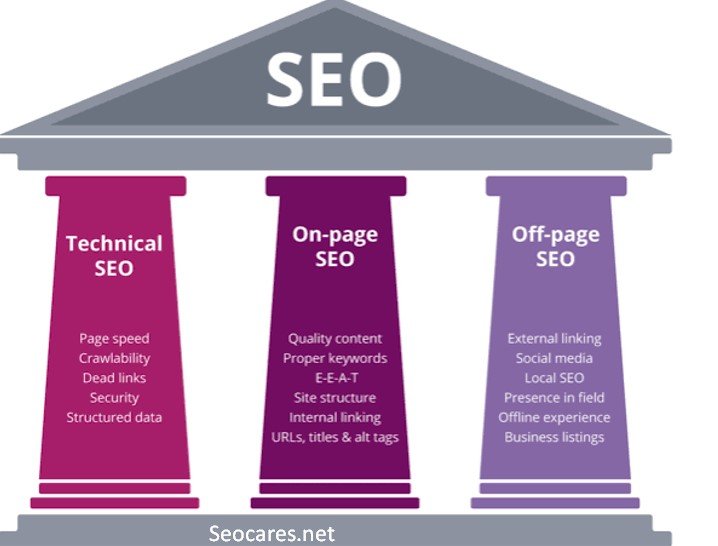
Every strong SEO strategy rests on three pillars. Think of these as the legs of a stool — remove one, and everything wobbles.
1. On-Page SEO
Everything you control directly on your web pages: titles, headings, content, images, and internal links.
2. Technical SEO
The behind-the-scenes structure that helps search engines crawl, read, and index your site properly.
3. Off-Page SEO
Actions taken outside your website that build trust and authority, like backlinks and brand mentions.
Let’s break each one down.
On-Page SEO Optimization
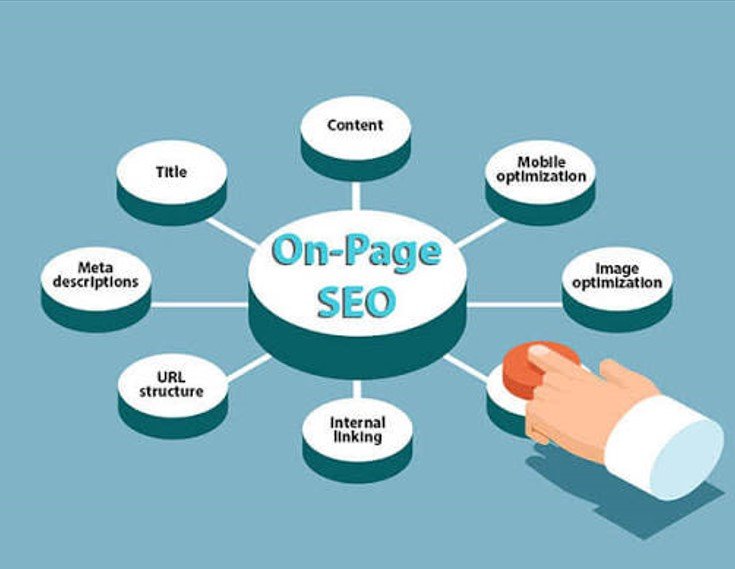
On-page SEO is where most beginners should start, because you have full control over it.
Keyword Research Comes First
Before writing a single word, figure out what your audience is actually typing into Google. Tools like Google Keyword Planner, Ahrefs, or Ubersuggest show you search volume and competition level.
Look for search intent, not just search volume. Someone searching “seo optimization tips” wants a how-to guide. Someone searching “seo agency near me” wants to hire a company. Match your content to that intent.
Title Tags and Meta Descriptions
Your title tag is the blue clickable headline in search results. Keep it under 60 characters and include your main keyword near the beginning.
Your meta description is the short summary below the title. It doesn’t directly boost rankings, but it strongly influences whether someone clicks your link over a competitor’s.
Header Structure (H1, H2, H3)
Use one H1 tag per page for your main title. Break the rest of your content into H2 and H3 subheadings. This helps readers scan your page and helps search engines understand your content’s structure.
Content Quality and Depth
Google’s Helpful Content system rewards pages that genuinely help readers, not pages stuffed with keywords. Focus on:
- Answering the reader’s full question, not just part of it
- Using clear, simple language
- Backing up claims with real data or examples
- Updating old content regularly to keep it accurate
Internal Linking
Link related pages on your own site together. This helps visitors explore more content and helps search engines discover your other pages.
Image Optimization
Compress images so they load fast, and add descriptive alt text. Alt text helps visually impaired users and gives search engines more context about your page.
Technical SEO Optimization
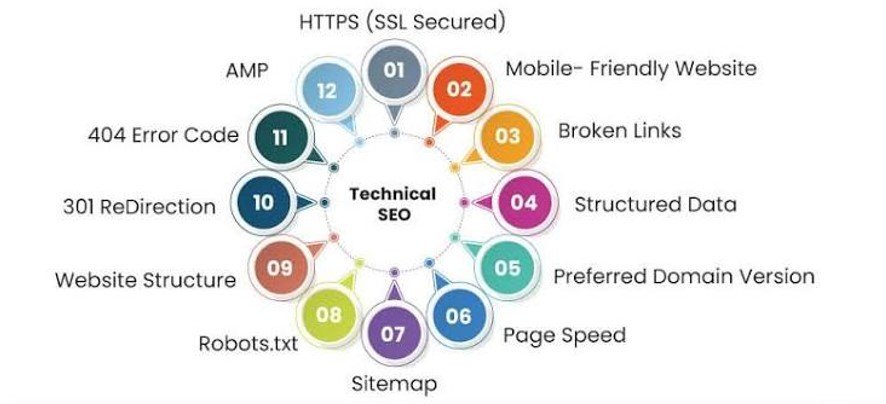
Technical SEO is invisible to most visitors, but it’s the foundation everything else stands on.
Site Speed
A slow website frustrates visitors and hurts rankings. Google’s Core Web Vitals measure loading speed, interactivity, and visual stability. Use tools like PageSpeed Insights to check your scores and fix issues like oversized images or unused code.
Mobile-Friendliness
More than half of all web traffic comes from mobile devices. Google uses mobile-first indexing, meaning it primarily looks at your mobile site when deciding rankings. Your site must look and work well on small screens.
Crawlability and Indexing
Search engines use bots called crawlers to scan your site. Make sure your robots.txt file isn’t blocking important pages, and submit an XML sitemap through Google Search Console so crawlers can find everything easily.
HTTPS Security
Websites without HTTPS encryption get flagged as “not secure” in browsers. This hurts trust and rankings. Getting an SSL certificate is now considered a baseline requirement, not an extra step.
Structured Data
Structured data, also called schema markup, is code that tells search engines exactly what your content means. It can help you earn rich results like star ratings, FAQ dropdowns, or recipe cards directly in search results.
Off-Page SEO Optimization
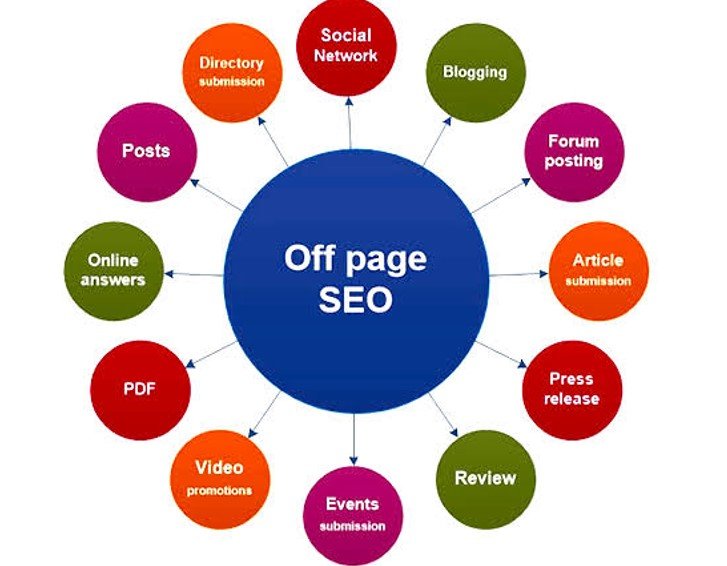
Off-page SEO builds your site’s reputation across the wider web.
Backlinks Still Matter
A backlink is a link from another website pointing to yours. Search engines treat backlinks like votes of confidence. A link from a respected, relevant site carries far more weight than dozens of links from low-quality sites.
Ways to earn quality backlinks include:
- Writing guest posts for reputable sites in your industry
- Creating original research or data that other sites want to cite
- Building relationships with journalists and bloggers
- Getting listed in trustworthy business directories
Brand Mentions and Social Signals
Even unlinked mentions of your brand name across the web can build trust signals over time. Active, consistent social media presence also supports overall brand credibility, even if it’s not a direct ranking factor.
Online Reviews
Positive reviews on Google Business Profile, Trustpilot, or industry-specific platforms boost trust, especially for local and service-based businesses.
Content and SEO: Why They Can’t Be Separated
Some people treat SEO and content as separate tasks. That’s a mistake. Content is the vehicle that carries your SEO strategy to your audience.
Google’s algorithms increasingly reward EEAT: Experience, Expertise, Authoritativeness, and Trustworthiness. This means your content should show real, first-hand knowledge, not generic filler.
Practical ways to boost EEAT in your content:
- Include author bios that show real credentials
- Cite original research, case studies, or personal experience
- Keep information current and factually accurate
- Avoid vague claims that can’t be backed up
Content written purely to please algorithms tends to feel hollow. Content written to genuinely help a reader — while still following SEO best practices — performs better in the long run.
Local SEO Optimization
If your business serves a specific city or region, local SEO deserves special attention.
Google Business Profile
Claim and fully complete your Google Business Profile. Add accurate business hours, photos, categories, and services. This listing often appears before organic results for local searches.
NAP Consistency
Make sure your Name, Address, and Phone number (NAP) match exactly across your website, directories, and social profiles. Inconsistent information confuses search engines and can hurt your local rankings.
Local Keywords
Include city or neighborhood names naturally in your titles, headers, and content where relevant, such as “plumber in Austin” instead of just “plumber.”
Common SEO Mistakes to Avoid
Even experienced website owners fall into these traps:
- Keyword stuffing: Repeating a keyword unnaturally makes content hard to read and can trigger spam penalties.
- Ignoring mobile users: A site that looks great on desktop but breaks on mobile loses both rankings and visitors.
- Buying low-quality backlinks: Spammy link schemes can get your site penalized instead of boosted.
- Duplicate content: Copying content across multiple pages confuses search engines about which page to rank.
- Neglecting page speed: Slow-loading pages drive visitors away before they even see your content.
- Skipping analytics: Without tracking tools like Google Analytics and Search Console, you’re optimizing blind.
SEO Optimization: Pros and Cons
Pros:
- Drives free, ongoing organic traffic once rankings improve
- Builds long-term brand credibility and trust
- Targets users actively searching for what you offer
- Improves overall website usability and speed
- Offers measurable, trackable results over time
Cons:
- Results take time, often three to six months or longer
- Requires ongoing effort, not a one-time fix
- Algorithm updates can shift rankings unexpectedly
- Competitive industries require significant resources
- Technical issues can be complex for beginners to fix alone
Tools That Make SEO Optimization Easier
You don’t need every tool on the market. Start with a focused set:
- Google Search Console – Tracks indexing, clicks, and technical errors, free from Google
- Google Analytics – Measures traffic sources and user behavior
- Ahrefs or SEMrush – Research keywords, backlinks, and competitors
- PageSpeed Insights – Checks Core Web Vitals and loading speed
- Yoast SEO or RankMath – WordPress plugins that guide on-page optimization
Pick two or three tools that match your current stage. A brand-new site benefits most from Search Console and a basic keyword tool. A growing site with real competitors gains more from a full platform like Ahrefs or SEMrush, since those tools reveal exactly what’s working for the pages already outranking you.
Building an SEO Optimization Workflow That Actually Sticks
Knowing the tactics is one thing. Turning them into a routine is what separates sites that rank from sites that stall.
Set a Realistic Cadence
SEO optimization isn’t a sprint you finish once. Break the work into manageable chunks:
- Weekly: Publish or update one piece of content, check Search Console for crawl errors
- Monthly: Review keyword rankings, audit page speed, check for broken links
- Quarterly: Refresh older articles, reassess your keyword strategy, review backlink profile
Prioritize by Impact
Not every page deserves equal attention. Focus first on:
- Pages already ranking on page two of Google, since small improvements can push them onto page one
- High-traffic pages with outdated information
- Pages targeting your most valuable, highest-converting keywords
Document What Works
Keep a simple log of changes you make and the results that follow. When a title tag rewrite boosts click-through rate, or a new internal link structure lifts rankings, write it down. Over time, this record becomes your own playbook, tailored to your specific audience instead of generic advice.
This kind of steady, measured approach is what separates sites that see lasting growth from those that chase quick wins and lose momentum after a single algorithm update.
Comparison Table: SEO Approaches
| Approach | Cost | Time to Results | Best For |
| DIY SEO | Low | 4–8 months | Small businesses, solo entrepreneurs |
| Hiring an SEO Agency | High | 3–6 months | Established businesses with budget |
| Freelance SEO Consultant | Medium | 3–7 months | Mid-sized businesses needing flexibility |
| SEO Software Only | Low–Medium | Varies widely | Teams with in-house marketing knowledge |
Frequently Asked Questions
1. What does SEO optimization actually mean?
It means improving your website’s structure, content, and reputation so search engines rank it higher for relevant searches.
2. How long does SEO optimization take to work?
Most sites see noticeable movement within three to six months, though competitive keywords can take longer.
3. Is SEO optimization a one-time task?
No. Search engines update their algorithms regularly, so SEO requires ongoing maintenance and updates.
4. Do I need coding skills for SEO optimization?
Not necessarily. Many platforms like WordPress offer plugins that handle technical SEO without coding knowledge.
5. What’s the difference between SEO and paid ads?
SEO builds organic, unpaid traffic over time. Paid ads deliver instant visibility but stop the moment you stop paying.
6. How important are backlinks for SEO optimization?
Very important. Quality backlinks remain one of the strongest trust signals search engines use to rank pages.
7. Can small businesses compete with big brands in SEO?
Yes, especially through local SEO and niche, specific keywords that large brands often overlook.
8. What is Core Web Vitals?
It’s a set of Google metrics measuring page loading speed, interactivity, and visual stability.
9. Does content length affect SEO rankings?
Not directly. What matters more is whether the content fully and clearly answers the searcher’s question.
10. How do I check if my SEO optimization is working?
Track rankings, organic traffic, and click-through rates using Google Search Console and Google Analytics.
Conclusion
SEO optimization isn’t a trick or a shortcut. It’s a disciplined, ongoing practice of making your website faster, clearer, and more trustworthy for both search engines and real people.
Start with solid keyword research, write content that genuinely helps your audience, fix the technical issues holding your site back, and build authority through quality backlinks. Do these consistently, and rankings will follow.
The businesses that win at SEO in 2026 aren’t the ones chasing algorithm hacks. They’re the ones building websites people actually trust — and search engines simply reward that trust with visibility.