Getting your website to show up on Google feels harder every year. Algorithms change. Competitors get smarter. And what worked last year might not work today.
But here’s the truth: SEO isn’t dead. It’s just different.
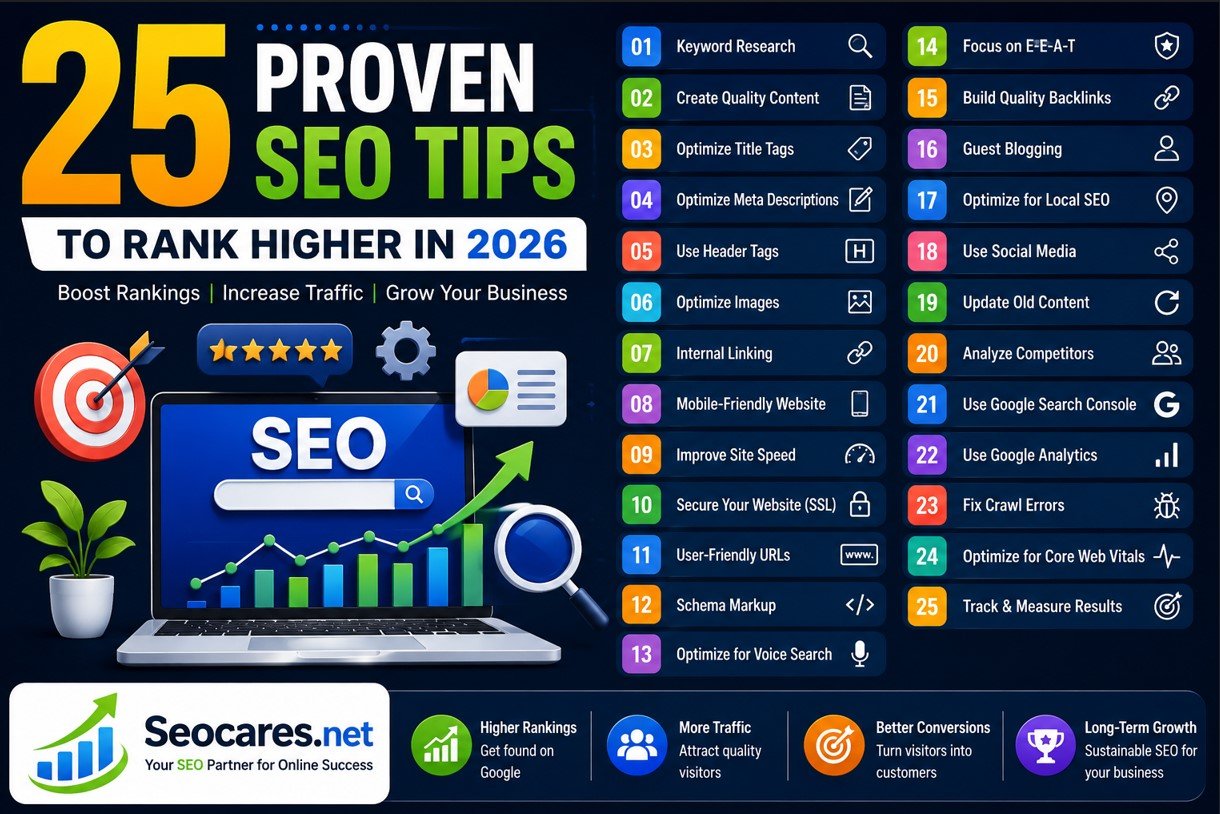
The sites that win in 2026 aren’t the ones stuffing keywords into every sentence. They’re the ones that actually help people. This guide breaks down 25 SEO tips that real websites are using right now to climb the rankings — no fluff, no outdated tricks, just what works.
Whether you’re running a small blog, an online store, or a local service business, these tips will give you a clear path forward.
Why SEO Still Matters in 2026
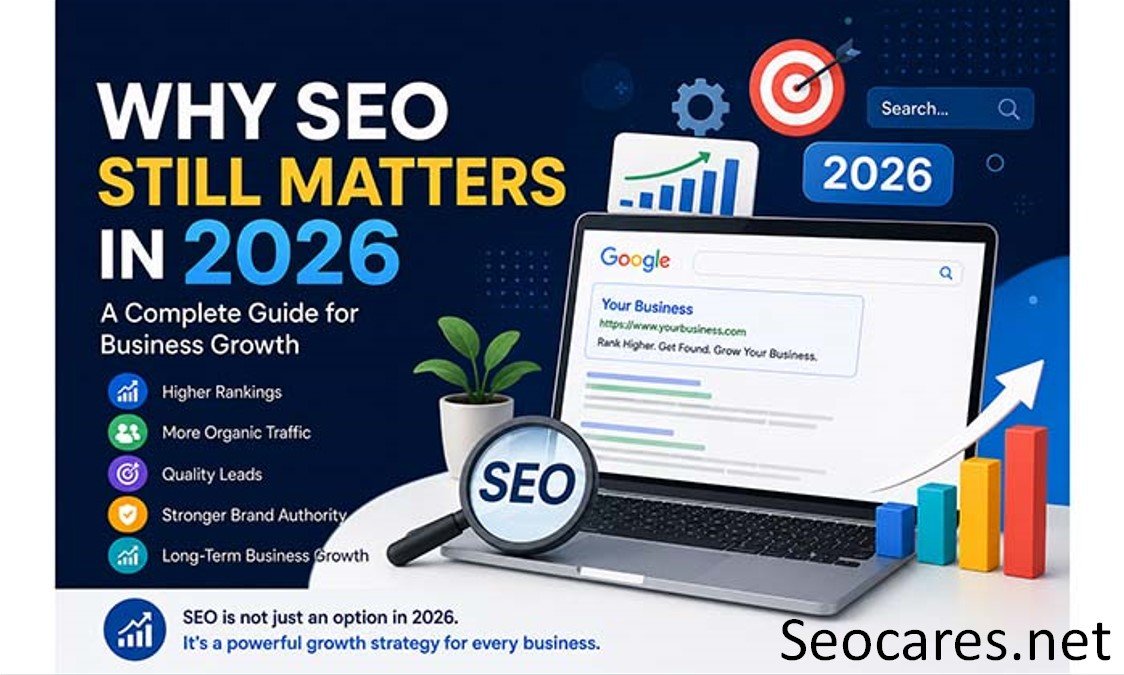
Search engines remain the starting point for most online journeys. People search before they buy, book, or decide. If your site isn’t showing up, someone else’s is — and they’re getting the customer you wanted.
Google’s algorithm now leans heavily on EEAT: Experience, Expertise, Authoritativeness, and Trustworthiness. This means real, useful content written by people who actually know the topic beats generic filler every time.
The good news? You don’t need a massive budget to compete. You need a smart strategy and consistent effort.
On-Page SEO Tips

On-page SEO covers everything you control directly on your website. This is the foundation everything else builds on.
1. Write Titles That Match Search Intent
Your title tag is often the first thing people see in search results. It needs to be clear, specific, and match what the searcher actually wants.
Instead of “Shoes | My Store,” try “Best Running Shoes for Flat Feet (2026 Buyer’s Guide).” The second version tells Google and users exactly what they’ll find.
2. Craft Meta Descriptions That Earn Clicks
Meta descriptions don’t directly boost rankings, but they influence click-through rate, which does matter. Keep them under 155 characters and include a reason to click — a benefit, a number, or a question.
3. Use One Clear H1 Per Page
Every page needs a single H1 that summarizes the main topic. Avoid using multiple H1 tags, as this confuses search engines about your page’s focus.
4. Structure Content With H2 and H3 Headings
Break your content into logical sections. This helps readers scan quickly and helps Google understand your content’s structure. It also increases your chances of ranking for Featured Snippets.
5. Optimize URL Slugs
Keep URLs short, descriptive, and free of unnecessary numbers or symbols. A slug like /seo-tips performs better than /post?id=48291.
6. Add Internal Links Naturally
Link to related pages on your site using descriptive anchor text. This spreads authority across your site and keeps visitors browsing longer.
7. Optimize Images for Speed and Search
Compress images before uploading, use descriptive file names, and always fill in alt text. This improves accessibility and gives search engines more context.
Technical SEO Tips

Technical SEO ensures search engines can find, crawl, and understand your site without obstacles.
1. Improve Page Load Speed
Slow websites lose visitors and rankings. Use tools like Google PageSpeed Insights to identify what’s slowing you down — usually large images, unused scripts, or poor hosting.
2. Make Your Site Mobile-Friendly
Most searches happen on phones. Google uses mobile-first indexing, meaning it primarily evaluates the mobile version of your site. Test your layout on multiple screen sizes.
3. Fix Broken Links and Redirects
Broken links frustrate users and waste crawl budget. Run a site audit every few months and fix or redirect any dead pages.
4. Create and Submit an XML Sitemap
A sitemap helps search engines discover every important page on your site. Submit it through Google Search Console after every major update.
5. Use HTTPS Everywhere
Security is a ranking factor, and users trust secure sites more. If you haven’t switched to HTTPS yet, this should be a top priority.
6. Clean Up Your Robots.txt File
This file tells search engines what they can and cannot crawl. A misconfigured robots.txt can accidentally block important pages from being indexed.
Content SEO Tips

Content is what actually earns rankings long-term. Technical fixes open the door, but content keeps people there.
1. Focus on Search Intent First
Before writing anything, ask what the searcher actually wants. Are they looking to buy, learn, or compare? Matching intent matters more than keyword density.
2. Write for Humans, Optimize for Search Engines Second
Google’s Helpful Content system rewards content that genuinely helps readers. Write naturally, answer real questions, and avoid forcing keywords into awkward sentences.
3. Update Old Content Regularly
Refreshing outdated statistics, adding new sections, and improving structure can boost rankings faster than publishing something brand new.
4. Target Featured Snippets
Answer common questions in 40–60 words directly under a relevant heading. This format is exactly what Google pulls for snippet boxes.
5. Use Semantic Keywords Naturally
Instead of repeating your main keyword, include related terms and entities. This shows search engines you understand the topic in depth, not just the phrase itself.
6. Add FAQs to Your Pages
FAQ sections answer follow-up questions, improve time on page, and often get pulled into rich results.
7. Show Real Experience
Add author bios, case studies, or personal insights. This directly supports the “Experience” part of EEAT and builds reader trust.
Off-Page SEO Tips

Off-page SEO builds your site’s reputation beyond your own pages.
1. Earn Backlinks From Relevant Sites
Quality matters far more than quantity. One link from a respected industry site outweighs dozens from low-quality directories.
2. Get Listed in Trusted Directories
Industry-specific directories and business listings still carry weight, especially for credibility and local visibility.
3. Build Brand Mentions
Even unlinked mentions of your brand name across the web can support your authority signals over time.
Local SEO Tips

If you serve a specific area, local SEO deserves its own focus.
1. Optimize Your Google Business Profile
Keep your hours, address, categories, and photos updated. This is often the first thing local customers see.
2. Collect and Respond to Reviews
Reviews influence both rankings and buying decisions. Respond to all of them, positive or negative, professionally and promptly.
SEO Tools Comparison
| Tool | Best For | Free Plan Available |
| Google Search Console | Indexing, performance tracking | Yes |
| Ahrefs | Backlink analysis, keyword research | Limited trial |
| Semrush | Competitor research, site audits | Limited trial |
| Ubersuggest | Beginner keyword research | Yes |
| Screaming Frog | Technical site audits | Yes (up to 500 URLs) |
Each tool serves a different purpose. Most successful SEO strategies combine at least two or three of these.
Pros and Cons of DIY SEO vs Hiring an Agency

DIY SEO
Pros:
- Full control over strategy and content
- No ongoing agency fees
- Deep understanding of your own business
Cons:
- Takes significant time to learn and execute
- Easy to make costly technical mistakes
- Slower results without experience
Hiring an Agency
Pros:
- Access to experienced specialists and tools
- Faster execution and testing
- Frees up your time for other business tasks
Cons:
- Higher upfront cost
- Requires vetting to find a trustworthy partner
- Less direct control over daily decisions
Common SEO Mistakes to Avoid
- Keyword stuffing — repeating a phrase unnaturally hurts readability and rankings alike.
- Ignoring mobile users — a huge share of traffic comes from phones.
- Buying low-quality backlinks — this can trigger penalties instead of boosting rankings.
- Skipping analytics — without tracking, you can’t know what’s actually working.
- Copying competitor content — original insights always outperform recycled ideas.
Frequently Asked Questions
1. How long does SEO take to show results?
Most sites start seeing measurable movement within three to six months, though competitive industries can take longer.
2. Is SEO still worth it in 2026?
Yes. Organic search remains one of the most cost-effective, long-term traffic sources available.
3. What’s the difference between on-page and off-page SEO?
On-page SEO involves elements you control directly on your site, like content and titles. Off-page SEO involves external signals like backlinks and brand mentions.
4. How many keywords should I target per page?
Focus on one primary keyword and a handful of related semantic terms rather than trying to rank for many unrelated phrases.
5. Does site speed really affect rankings?
Yes. Speed affects both user experience and how search engines evaluate page quality.
6. Can I do SEO without technical skills?
Basic on-page and content SEO don’t require coding knowledge. Technical SEO may need some learning or outside help.
7. How often should I update old content?
Reviewing top-performing pages every six to twelve months keeps information accurate and competitive.
8. What is EEAT and why does it matter?
EEAT stands for Experience, Expertise, Authoritativeness, and Trustworthiness. Google uses it to evaluate whether content deserves to rank, especially for topics that affect people’s decisions.
9. Are backlinks still important?
Yes, quality backlinks remain one of the strongest ranking signals, though relevance matters more than raw quantity.
10. What’s the biggest SEO mistake beginners make?
Focusing only on keywords while ignoring user experience, site speed, and genuine content quality.
Conclusion
SEO in 2026 rewards sites that genuinely serve their audience. The tips above cover everything from technical fixes to content strategy to off-page authority — but they all point to the same idea: build something worth finding.
Start with the basics. Fix what’s broken. Write content that actually answers questions. Then build outward from there.
Consistency beats perfection. Apply a few of these tips each week, track your results, and adjust as you go. Over time, small, steady improvements compound into real, lasting growth in search visibility.