Python web development has become one of the most in-demand skills in India’s tech job market. From startups in Bangalore to global companies hiring remote developers, Python powers everything from simple blogs to massive platforms like Instagram and Spotify.
If you’re wondering whether Python is worth learning for building websites and web apps, the short answer is yes. Python is beginner-friendly, has a huge community, and comes with powerful frameworks that handle the heavy lifting for you.
This guide breaks down everything you need to know — the best frameworks, tools, real-world use cases, and a practical roadmap to start building. Whether you’re a student, a career switcher, or a founder planning your next product, this article will help you make informed decisions.
What Is Python Web Development?
Python web development refers to building websites, web applications, and APIs using the Python programming language along with specialized frameworks. Instead of writing every function from scratch, developers use frameworks like Django or Flask that already include tools for handling databases, user authentication, security, and page routing.
Python works on the backend — the part of a website users don’t see. It manages data, processes requests, and connects to databases. The frontend (what users see and interact with) is usually built with HTML, CSS, and JavaScript, though Python can generate that too through templating engines.
Think of Python as the engine of a car. Users interact with the steering wheel and dashboard (frontend), but the engine (Python backend) is what actually makes everything run smoothly.
Why Choose Python for Web Development?
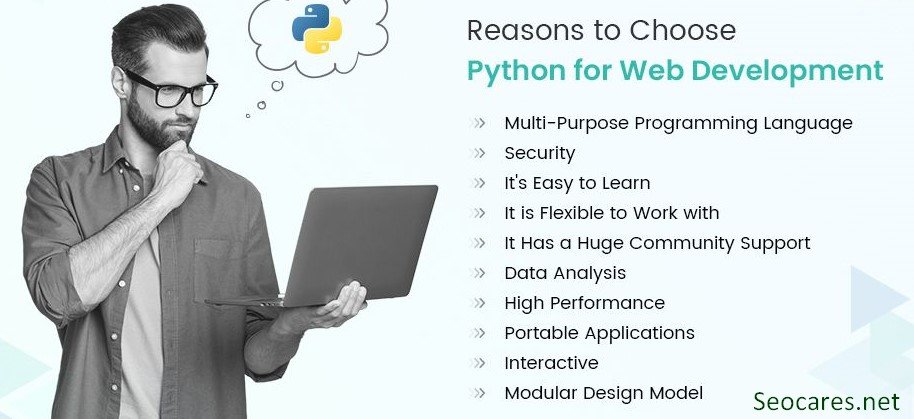
Python didn’t become one of the world’s most popular languages by accident. Here’s what makes it a smart choice for web projects:
- Readable syntax — Python code looks almost like plain English, which shortens the learning curve significantly.
- Massive ecosystem — Thousands of pre-built packages exist for almost any feature you need, from payment gateways to AI integration.
- Strong community support — If you get stuck, chances are someone has already solved your exact problem on Stack Overflow or GitHub.
- Scalability — Companies like Instagram and Pinterest run on Python at massive scale, proving it can handle serious traffic.
- Versatility — The same language you use for web apps can also handle automation, data analysis, and machine learning, making your skills transferable.
- Faster development cycles — Frameworks like Django follow the “batteries included” philosophy, meaning less code for common features.
For Indian developers specifically, Python’s popularity means abundant learning resources, active local communities, and strong demand from both domestic startups and international remote-first companies.
Top Python Web Frameworks Compared
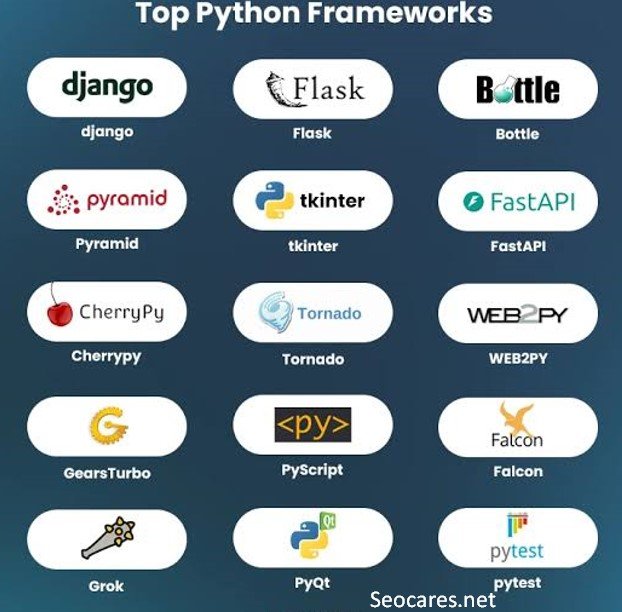
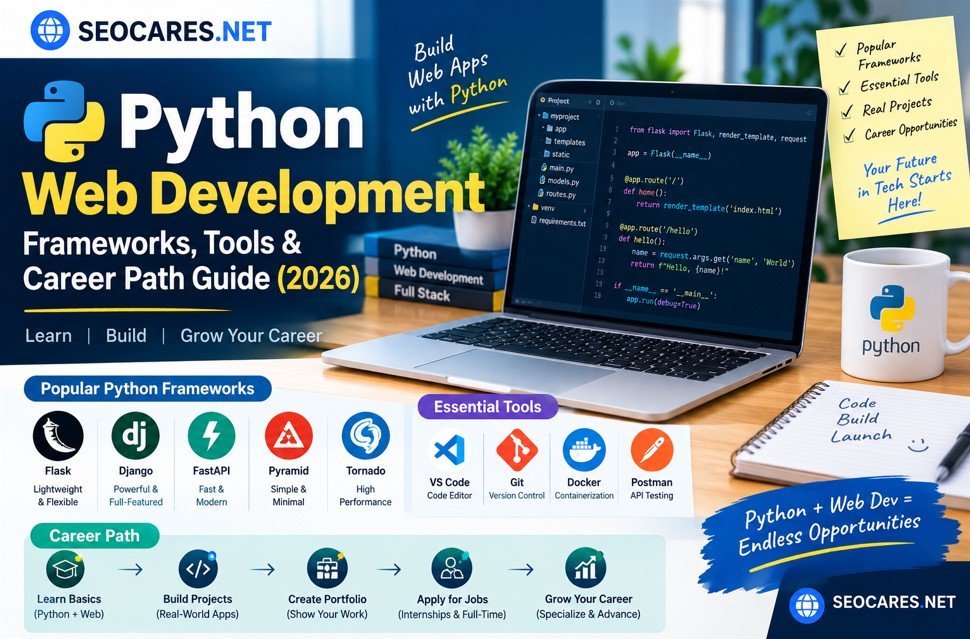
Choosing the right framework depends on your project size, timeline, and goals. Here’s a breakdown of the leading options.
Django
Django is a full-featured, “batteries-included” framework ideal for building complete web applications quickly. It ships with an admin panel, authentication system, and ORM (a tool that lets you talk to databases using Python instead of SQL).
Best for: E-commerce sites, content management systems, SaaS platforms, and projects that need to launch fast.
Flask
Flask is a lightweight, minimalist framework that gives developers more control over which components to use. It doesn’t force a specific project structure, making it popular for smaller applications and APIs.
Best for: Microservices, prototypes, small business websites, and learning the fundamentals of web development.
FastAPI
FastAPI is a modern framework built specifically for creating high-performance APIs. It uses Python’s type hints to automatically validate data and generate interactive documentation.
Best for: REST APIs, machine learning model deployment, and applications where speed and automatic documentation matter.
Pyramid
Pyramid sits between Django and Flask in terms of flexibility. It scales well from small applications to complex systems without forcing architectural decisions early on.
Best for: Developers who want Flask-like flexibility with more built-in tools for larger projects.
Django vs Flask vs FastAPI: Which One Should You Learn?
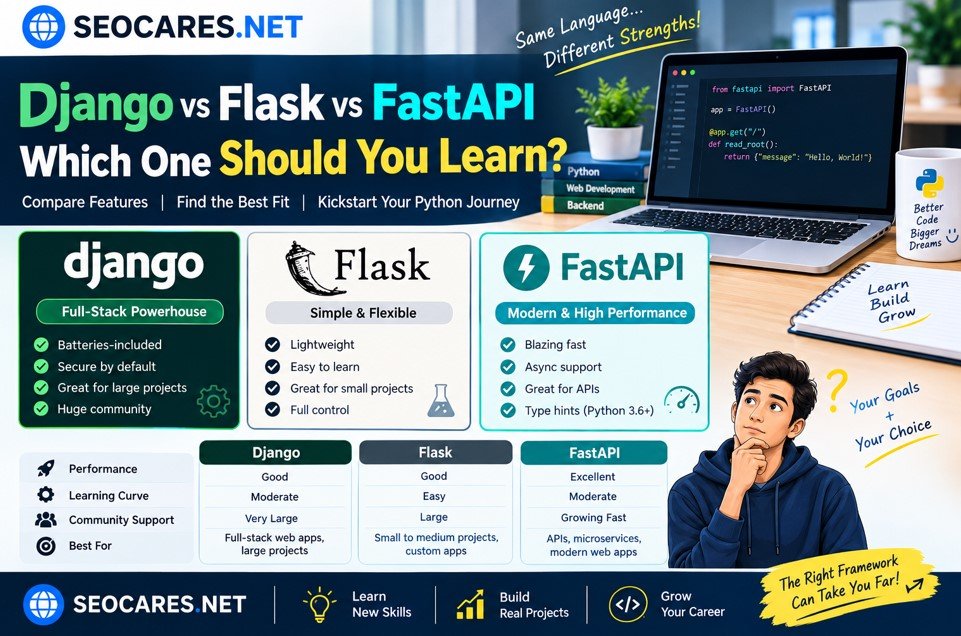
This comparison table highlights the practical differences to help you decide.
| Feature | Django | Flask | FastAPI |
| Learning curve | Moderate | Easy | Moderate |
| Built-in admin panel | Yes | No | No |
| Best for | Full websites | Small apps/APIs | High-speed APIs |
| Speed (performance) | Good | Good | Excellent |
| Flexibility | Lower (opinionated) | High | High |
| Async support | Partial | Limited (needs extensions) | Native |
| Auto-generated docs | No | No | Yes |
| Ideal for beginners | Yes | Yes | Moderate |
Our recommendation: If you’re a complete beginner building your first full website, start with Django — it teaches good structure and includes most tools you’ll need. If you prefer building small, focused projects and want deeper control, start with Flask. If your goal is building APIs for mobile apps or AI-powered products, learn FastAPI after grasping the basics.
Essential Tools and Libraries
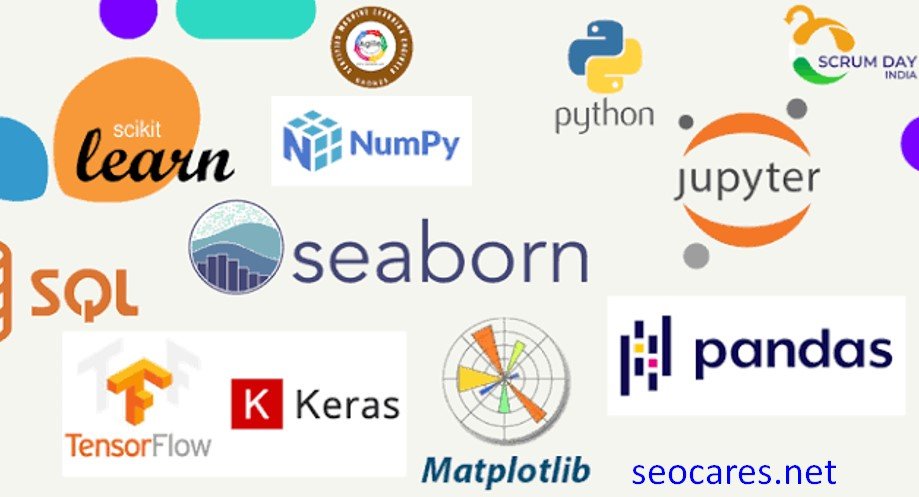
Beyond the core framework, these tools make Python web development faster and more professional:
- PostgreSQL or MySQL — Reliable databases for storing application data.
- Git and GitHub — Version control for tracking code changes and collaborating with teams.
- Django REST Framework (DRF) — Extends Django to build robust APIs.
- SQLAlchemy — A flexible ORM commonly used with Flask.
- Celery — Handles background tasks like sending emails or processing large files without slowing down the main app.
- Docker — Packages your application so it runs consistently across different environments.
- Gunicorn or Uvicorn — Production servers that run your Python app efficiently.
- Pytest — A testing framework to catch bugs before they reach real users.
Learning even three or four of these tools alongside your main framework will make you significantly more employable.
How to Build Your First Python Web App
Here’s a practical roadmap for beginners, broken into manageable stages.
Step 1: Learn Python Fundamentals
Before touching any framework, get comfortable with variables, loops, functions, and object-oriented programming. This foundation prevents confusion later.
Step 2: Understand How the Web Works
Learn the basics of HTTP requests, HTML, and how browsers communicate with servers. You don’t need to master frontend design, but understanding the flow is essential.
Step 3: Pick a Framework and Follow a Project-Based Tutorial
Choose Django or Flask and build something real — a to-do list, a blog, or a simple portfolio site. Avoid tutorials that only explain theory without hands-on coding.
Step 4: Connect a Database
Practice storing and retrieving data. This is where most real-world applications gain their value, since almost every website needs to save user information.
Step 5: Add Authentication and Deploy
Add login and signup functionality, then deploy your project using a platform like Render, Railway, or a VPS provider such as Hostinger. Seeing your project live online is a major motivation boost.
Step 6: Build a Portfolio
Create two or three complete projects that solve real problems. Employers and clients care more about what you’ve built than certificates alone.
Real-World Use Cases of Python in Web Development
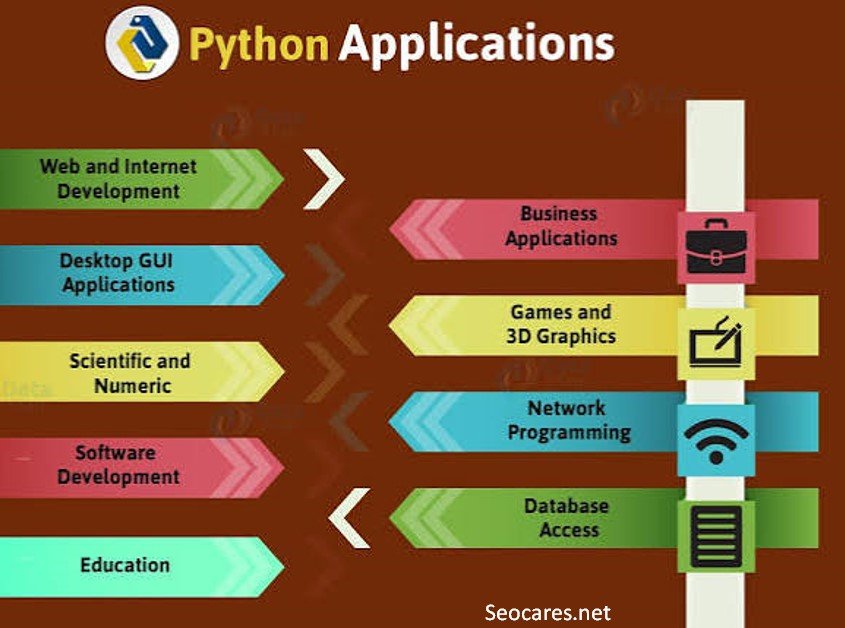
Python isn’t just theoretical — it powers some of the world’s biggest platforms:
- Instagram uses Django to handle billions of interactions daily.
- Spotify relies on Python for backend services and data processing.
- Pinterest built its original platform using Flask before scaling further.
- Reddit was originally built with Python and continues to use it extensively.
- Dropbox uses Python across both its desktop client and backend infrastructure.
Beyond tech giants, Python web development is widely used for:
- E-commerce platforms and marketplaces
- Content management systems and blogs
- Internal business tools and dashboards
- API backends for mobile apps
- Data-driven dashboards and analytics platforms
Python Web Developer Salary in India
Salary expectations vary based on experience, location, and specialization, but here’s a general picture based on current market trends:
- Entry-level (0–2 years): ₹3,50,000 – ₹6,00,000 per year
- Mid-level (2–5 years): ₹6,00,000 – ₹12,00,000 per year
- Senior-level (5+ years): ₹12,00,000 – ₹25,00,000+ per year
Developers who combine Python web development with skills like cloud platforms (AWS, Azure), DevOps, or AI integration typically command higher salaries. Freelancers and remote workers serving international clients often earn significantly more than local market averages, especially when working with clients in the US, UK, or Middle East.
Common Challenges and How to Solve Them
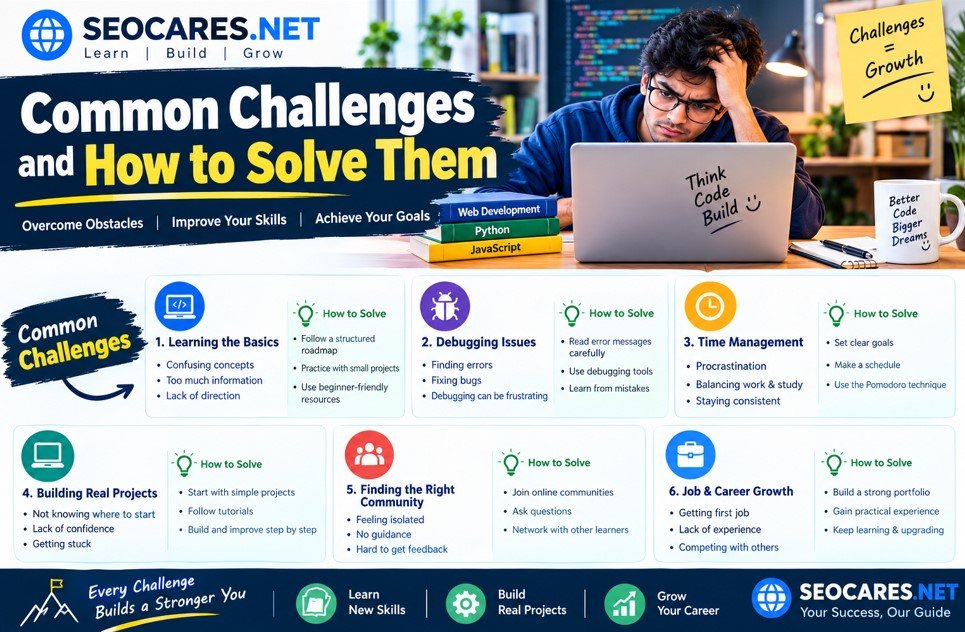
Every new developer faces obstacles. Here are the most common ones and practical fixes.
Challenge: Getting overwhelmed by too many tools Focus on one framework at a time. Don’t try to learn Django, Flask, and FastAPI simultaneously.
Challenge: Struggling with deployment Start with beginner-friendly platforms like Render or Railway before moving to more complex setups like AWS or a VPS.
Challenge: Writing messy, unorganized code Follow the framework’s recommended project structure from day one instead of improvising your own.
Challenge: Difficulty debugging errors Learn to read error messages carefully and use Python’s built-in debugger or print statements to trace issues step by step.
Challenge: Slow application performance Optimize database queries first, since inefficient queries are the most common cause of slow Python web apps.
Pros and Cons of Python Web Development
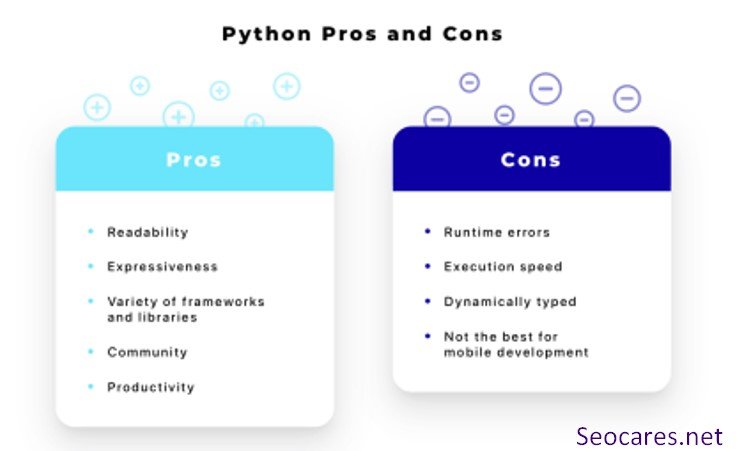
Pros
- Easy to learn and read, even for non-programmers
- Huge library ecosystem covering nearly every feature
- Strong community and abundant free learning resources
- Works well for both small projects and enterprise-scale applications
- Skills transfer easily into data science and automation
Cons
- Generally slower in raw execution speed compared to compiled languages like Go or Java
- Global Interpreter Lock (GIL) can limit true multi-threading performance
- Django can feel heavy and rigid for very small projects
- Requires additional tools for high-concurrency, real-time applications
Frequently Asked Questions
1. Is Python good for web development in 2026?
Yes. Python remains one of the top choices for backend development, especially for startups, APIs, and data-driven applications.
2. Which Python framework is best for beginners?
Django is often recommended for beginners because it includes most essential tools out of the box, reducing setup complexity.
3. Can I get a web development job knowing only Python?
You’ll also need basic HTML, CSS, and JavaScript knowledge, plus database skills, since most jobs require full-stack awareness even for backend roles.
4. How long does it take to learn Python web development?
With consistent daily practice, most learners can build basic web apps within 3–6 months and become job-ready within 8–12 months.
5. Is Django or Flask better for a career?
Django offers more job opportunities for full-stack roles, while Flask is valued for microservices and API-focused positions. Learning both increases your versatility.
6. Do Python web developers need to know JavaScript?
Yes, at least basic JavaScript is needed for handling frontend interactivity, even if your main focus is backend development.
7. What is FastAPI used for?
FastAPI is primarily used for building fast, well-documented APIs, often for mobile apps, microservices, and machine learning model deployment.
8. Is Python web development in demand in India?
Yes. Demand continues to grow across startups, IT services companies, and remote positions with international clients.
9. Can I freelance as a Python web developer?
Absolutely. Many Indian developers earn well through freelance platforms by building websites, APIs, and automation tools for global clients.
10. What should I build first as a beginner?
A simple blog or to-do list application is ideal, since it covers core concepts like databases, forms, and user authentication without overwhelming complexity.
Conclusion
Python web development offers a practical, high-value path whether you’re starting your first tech career or expanding an existing skill set. With frameworks like Django, Flask, and FastAPI covering everything from simple websites to high-performance APIs, there’s a clear entry point for every skill level.
The key is consistent, hands-on practice. Pick one framework, build real projects, and gradually expand your toolkit with databases, deployment, and testing skills. The developers who succeed aren’t necessarily the most talented — they’re the ones who kept building.
Start small, stay consistent, and your Python web development skills will open doors across India’s growing tech industry and beyond.