Getting your first web development internship can feel overwhelming, especially with thousands of students competing for a handful of good openings every year in India.
You might be wondering where to even start. Should you learn more languages first? Do you need a certificate? Will companies even respond to a student with no work experience?
This guide answers all of that. It walks you through everything from choosing the right skills to writing an application that actually gets noticed. By the end, you will know exactly what recruiters look for and how to stand out, even without prior job experience.
Let’s get into it.
What Is a Web Development Internship?
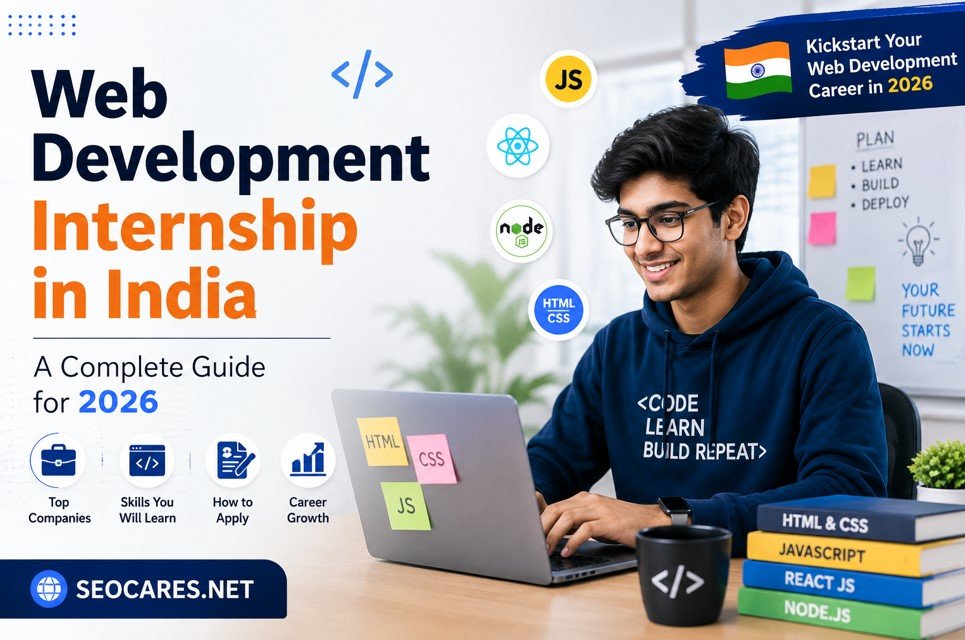
A web development internship is a short-term training role where a student or fresher works on real websites or web applications under the guidance of experienced developers.
Unlike classroom projects, internships involve live codebases, real deadlines, and actual users. You might fix bugs, build new features, or help maintain an existing site.
Most internships in India last between one and six months. Some are part of college curriculum requirements, while others are taken up independently to build experience before the final placement season.
The core idea is simple: you learn by doing, not just by reading tutorials.
Why Web Development Internships Matter in India

India produces over 1.5 million engineering graduates every year, and a large share of them target IT and software roles. In such a crowded market, a degree alone rarely sets you apart.
Here’s why an internship changes that:
- Practical experience shows employers you can actually code, not just talk about it.
- Real-world problem solving teaches skills no classroom can replicate, like debugging production issues or working with version control under pressure.
- Networking with mentors and teams often leads to full-time job offers later.
- Confidence grows once you have shipped something real, even a small feature.
- Resume weight increases significantly. Recruiters scan resumes fast, and “worked on live project” beats “completed course” almost every time.
Many Indian startups and IT companies, including TCS, Infosys, and countless smaller firms, actively hire interns who later convert to full-time employees. This pipeline is one of the fastest ways into the tech industry.
Skills You Need Before Applying
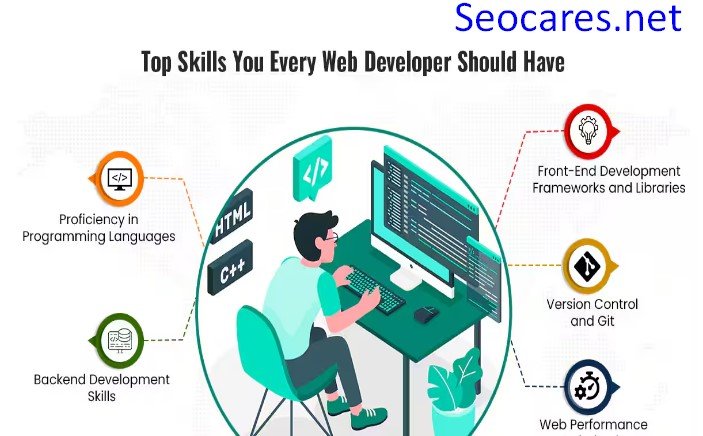
You don’t need to master everything before applying. But having a solid base makes your application far stronger.
Core Technical Skills
- HTML and CSS — the foundation of every website. You should be comfortable building responsive layouts.
- JavaScript — essential for interactivity. Understand functions, DOM manipulation, and basic ES6 syntax.
- A frontend framework — React is the most in-demand in India right now, followed by Vue and Angular.
- Git and GitHub — version control is non-negotiable. Every team uses it.
- Basic backend knowledge — Node.js, Express, or even PHP shows you understand how the full stack connects.
- Databases — MySQL or MongoDB basics help you understand how data flows through an app.
Soft Skills That Recruiters Notice
- Clear communication, especially explaining technical problems simply
- Willingness to ask questions instead of guessing
- Time management, since internships often run alongside college work
- Adaptability, because tech stacks vary between companies
You don’t need to be an expert in all of these. Recruiters hiring interns expect a learning curve. What matters is showing genuine effort and a foundation to build on.
Types of Web Development Internships

Not all internships look the same. Understanding the differences helps you target the right opportunities.
Remote Internships
Remote internships have grown massively since 2021 and remain popular in 2026. They offer flexibility and let you apply to companies outside your city, widening your options considerably.
On-Site Internships
On-site roles give you direct mentorship and office culture exposure. They’re common with mid-sized IT firms and product companies in cities like Bengaluru, Pune, and Hyderabad.
Freelance-Style Internships
Some startups hire interns on a project basis rather than fixed hours. You deliver specific features or fixes and get paid per milestone.
College-Affiliated Internships
Many engineering colleges partner with companies for structured internship programs, often during summer break, that come with academic credit.
Open Source Contribution Programs
Programs like Google Summer of Code aren’t traditional internships, but they function similarly. Contributing to real open-source projects builds a genuinely impressive portfolio.
Where to Find Web Development Internships

Finding the right internship is often harder than doing the work itself. Here are the most reliable channels.
Internship Platforms
- Internshala — India’s largest internship-focused platform, widely used by students.
- LinkedIn — search filters for internships plus direct messaging to recruiters.
- AngelList (Wellfound) — strong for startup internships, including remote roles.
- Naukri and Indeed — broader job boards that also list internship postings.
Company Career Pages
Checking the careers page of companies you admire directly often reveals openings before they hit job boards.
College Placement Cells
Most colleges have a training and placement office that maintains relationships with recruiters. Don’t skip this resource just because it feels old-fashioned.
Cold Outreach
Sending a short, polite email to a startup’s founder or engineering lead, along with a link to your GitHub, sometimes works better than formal applications. Small teams appreciate initiative.
Hackathons and Tech Events
Recruiters attend hackathons specifically to spot talent. Winning isn’t required. Showing up, building something, and talking to people is often enough.
How to Build a Portfolio That Gets Noticed

A portfolio matters more than a resume for developer roles. It’s proof, not a promise.
What to Include
- 3 to 5 solid projects, not twenty half-finished ones
- A live demo link for each project, not just source code
- Clean, commented GitHub repositories
- A short write-up explaining the problem each project solves
Project Ideas That Actually Impress
- A full-stack app with authentication, like a to-do list with user accounts
- A clone of a popular site (like a simplified Netflix or Airbnb interface) to show layout skills
- An API integration project, such as a weather app pulling live data
- A personal portfolio website built entirely by you, showcasing design sense
Quality beats quantity every time. One well-documented project with clean code outperforms five rushed ones.
Writing a Resume and Cover Letter That Work

Recruiters spend an average of six to eight seconds scanning a resume. Make those seconds count.
Resume Tips
- Keep it to one page
- List your GitHub and portfolio link at the top
- Use action verbs: “built,” “developed,” “deployed,” not “responsible for”
- Quantify wherever possible, like “reduced page load time by 30%”
- Skip generic objective statements; they add no value
Cover Letter Tips
- Address the specific company, never a generic “To whom it may concern”
- Mention one specific project or product of theirs you admire
- Explain briefly why you want this internship, not internships in general
- Keep it under 200 words
A personalized, specific application beats a mass-sent generic one every single time.
Cracking the Interview
Internship interviews in web development usually cover three areas: technical basics, problem-solving, and communication.
What to Expect
- Basic HTML/CSS/JS questions, sometimes live coding
- Questions about your own projects, so know them inside out
- A small coding challenge, often solvable in 30–45 minutes
- Behavioral questions about teamwork and handling deadlines
How to Prepare
- Practice explaining your projects out loud, not just coding them
- Review fundamentals like the box model, event bubbling, and array methods
- Solve a few problems on platforms like LeetCode or HackerRank, focused on arrays and strings
- Prepare two or three thoughtful questions to ask the interviewer
Confidence comes from preparation, not memorization. Interviewers can tell the difference between someone reciting answers and someone who genuinely understands the code they wrote.
Paid vs Unpaid Internships: Comparison Table
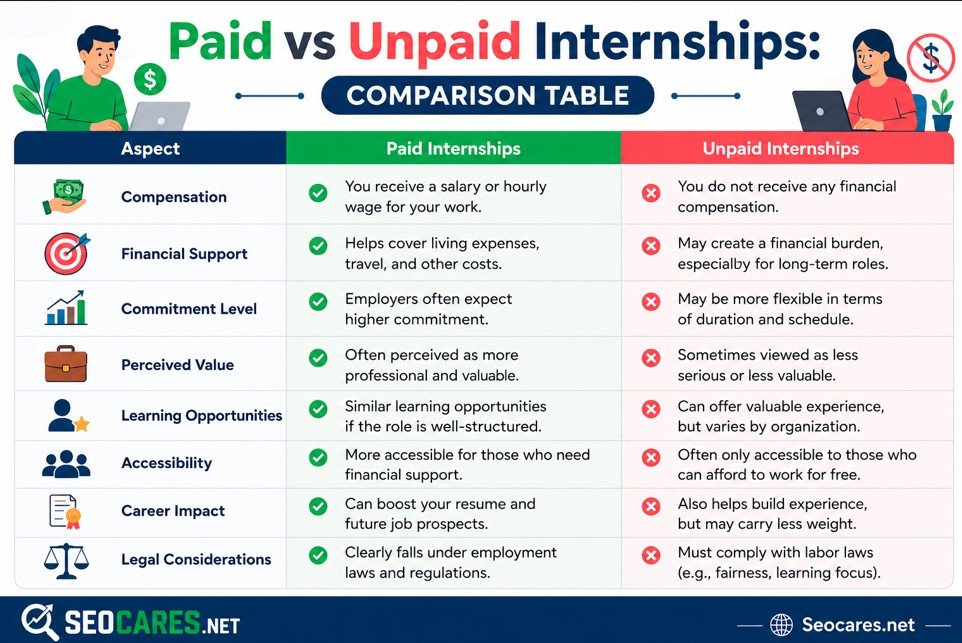
| Factor | Paid Internship | Unpaid Internship |
| Financial support | Provides stipend, usually ₹5,000–₹25,000/month | No monetary compensation |
| Company seriousness | Often signals a structured, invested program | Varies; some are genuine, others less organized |
| Learning quality | Generally high, with mentorship | Can be equally good, depends on the team |
| Competition level | Higher, since more students apply | Lower, easier to get accepted |
| Best for | Students wanting income plus experience | Students prioritizing skill-building over pay |
| Common providers | Mid-size IT firms, funded startups | Early-stage startups, NGOs, personal projects |
Both paths can lead to solid outcomes. What matters most is the quality of work and mentorship, not the stipend amount alone.
Pros and Cons of Doing a Web Development Internship
Pros
- Builds real-world coding confidence beyond textbook knowledge
- Strengthens your resume for placement season
- Opens doors to full-time offers through internship-to-hire pipelines
- Expands your professional network early
- Teaches workplace etiquette and collaboration tools like Slack and Jira
Cons
- Unpaid internships are still common and can strain finances
- Balancing internship with college work gets demanding
- Some internships offer limited mentorship, especially at very small startups
- Remote internships can feel isolating without in-person guidance
- A poorly chosen internship may involve repetitive, low-value tasks
Weighing these honestly before committing helps you choose an internship that actually benefits your growth, not just your resume.
Common Mistakes Students Make

- Applying without a portfolio. A resume alone rarely convinces a technical recruiter.
- Learning too many things shallowly. Depth in one stack beats surface knowledge of five.
- Ignoring soft skills. Technical ability alone doesn’t guarantee a good internship experience.
- Ghosting after acceptance. This damages your reputation, especially in tight-knit tech communities.
- Not asking for feedback. Interns who ask “how can I improve” grow faster than those who don’t.
What Happens After the Internship
A good internship rarely ends when the internship does. Here’s what typically follows:
- Letter of recommendation from your mentor or manager, useful for future applications
- Full-time offer, especially if you performed well and the company has openings
- Stronger resume for your next internship or placement drive
- Professional references you can list in future job applications
- Real project experience to discuss confidently in future interviews
Always ask for a certificate or LinkedIn recommendation before your internship ends. It’s a small ask that adds long-term value to your career profile.
Frequently Asked Questions
1. What is the ideal duration for a web development internship?
Most internships run for 2 to 6 months. Summer internships (May–July) are the most common for college students in India.
2. Do I need a degree in computer science to get a web development internship?
No. Many successful interns come from non-CS backgrounds, including electronics, mechanical, or even commerce, as long as they can demonstrate coding skills.
3. Can a beginner with no coding experience get an internship?
It’s difficult but not impossible. Beginners should first build 2–3 small projects to show basic competency before applying.
4. Are unpaid internships worth doing?
Yes, if the mentorship and project quality are strong. Prioritize learning value over stipend when you’re just starting out.
5. Which programming language should I learn first for web development?
Start with HTML and CSS, then move to JavaScript. These three form the foundation of nearly every web development role.
6. How many projects should I have before applying?
Three to five well-built, deployed projects are enough. Focus on quality and clear documentation over sheer quantity.
7. Is React necessary for a web development internship?
It’s not mandatory, but React is the most requested frontend framework in Indian job postings, so learning it significantly improves your chances.
8. How do I find remote web development internships in India?
Platforms like Internshala, LinkedIn, and AngelList list many remote roles. Filter by “remote” and “internship” to narrow your search.
9. What stipend can I expect for a web development internship in India?
Stipends typically range from ₹5,000 to ₹25,000 per month, depending on the company size, city, and your skill level.
10. Can a web development internship convert into a full-time job?
Yes, this is common. Many companies use internships specifically as a trial period before extending full-time offers.
Conclusion
Landing a web development internship isn’t about knowing everything. It’s about showing genuine skill, real projects, and a willingness to learn on the job.
Start by building a small but solid portfolio. Apply through platforms like Internshala and LinkedIn, but don’t ignore direct outreach to startups you admire. Prepare for interviews by practicing your fundamentals and explaining your own projects clearly.
Most importantly, treat your first internship as a learning opportunity, not just a resume line. The skills, confidence, and connections you build here often shape the rest of your tech career.
Your first internship is closer than you think. Start applying today.