Picking the right SEO tools can feel overwhelming. There are dozens of platforms on the market, each promising to boost your rankings, grow your traffic, and outsmart your competitors. Some are built for beginners. Others are made for agencies managing hundreds of client sites.
This guide breaks down everything you need to know. You’ll learn what SEO tools actually do, which ones are worth your money in 2026, and how to build a tool stack that fits your budget and goals. Whether you run a small blog, an ecommerce store, or a marketing agency, you’ll walk away with a clear plan.
Let’s get into it.
What Are SEO Tools?
SEO tools are software platforms built to help websites rank higher on search engines like Google and Bing. They collect data, run audits, and automate tasks that would otherwise take hours to do by hand.
Most SEO tools handle one or more of these core jobs:
- Keyword research and search intent analysis
- Technical site audits and crawl diagnostics
- Backlink tracking and link building
- Content optimization and readability scoring
- Rank tracking across locations and devices
- Competitor analysis and gap reports
Some platforms try to do all of this in one dashboard. Others specialize in a single task and do it exceptionally well. Both approaches have their place, depending on your budget and how deep you need to go.
Click More: SEO Company
Why SEO Tools Matter More Than Ever in 2026

Search has changed a lot in the past few years. Google now shows AI Overviews at the top of many results pages. Tools like ChatGPT, Gemini, and Perplexity are becoming new discovery channels alongside traditional search. This shift, often called generative engine optimization (GEO), means visibility no longer stops at the ten blue links.
Modern SEO tools have adapted. Many now track how often a brand appears inside AI-generated answers, not just in classic search results. This gives site owners a fuller picture of where their traffic and visibility actually come from.
At the same time, Google’s Helpful Content system continues to reward original, well-researched content and penalize thin or AI-spun pages that add no real value. That makes tools with strong content scoring, EEAT signals, and originality checks more important than ever.
In short: guessing your way through SEO no longer works. Data-driven decisions are the baseline, not a luxury.
Click Here: SEO Agency Interamplify
SEO Tools You Should Know
Before comparing specific platforms, it helps to understand the categories they fall into. Most successful SEO strategies use a mix of these.
Keyword Research Tools
These tools show search volume, competition level, and related terms. They help you find topics your audience is actually searching for.
Technical SEO Tools
These crawl your site like a search engine bot does. They flag broken links, duplicate content, slow pages, and indexing issues.
Rank Tracking Tools
These monitor where your pages sit in search results over time, often by location, device, and search engine.
Backlink Analysis Tools
These show who links to your site, who links to your competitors, and where new link opportunities exist.
Content Optimization Tools
These score your content against top-ranking pages and suggest improvements to structure, keywords, and readability.
All-in-One SEO Platforms
These combine several categories above into a single dashboard, trading some depth for convenience.
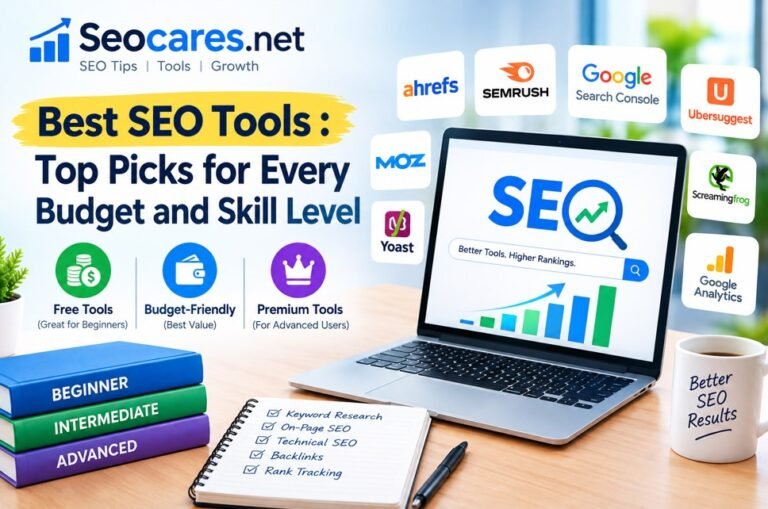
Top SEO Tools in 2026 (Comparison Table)
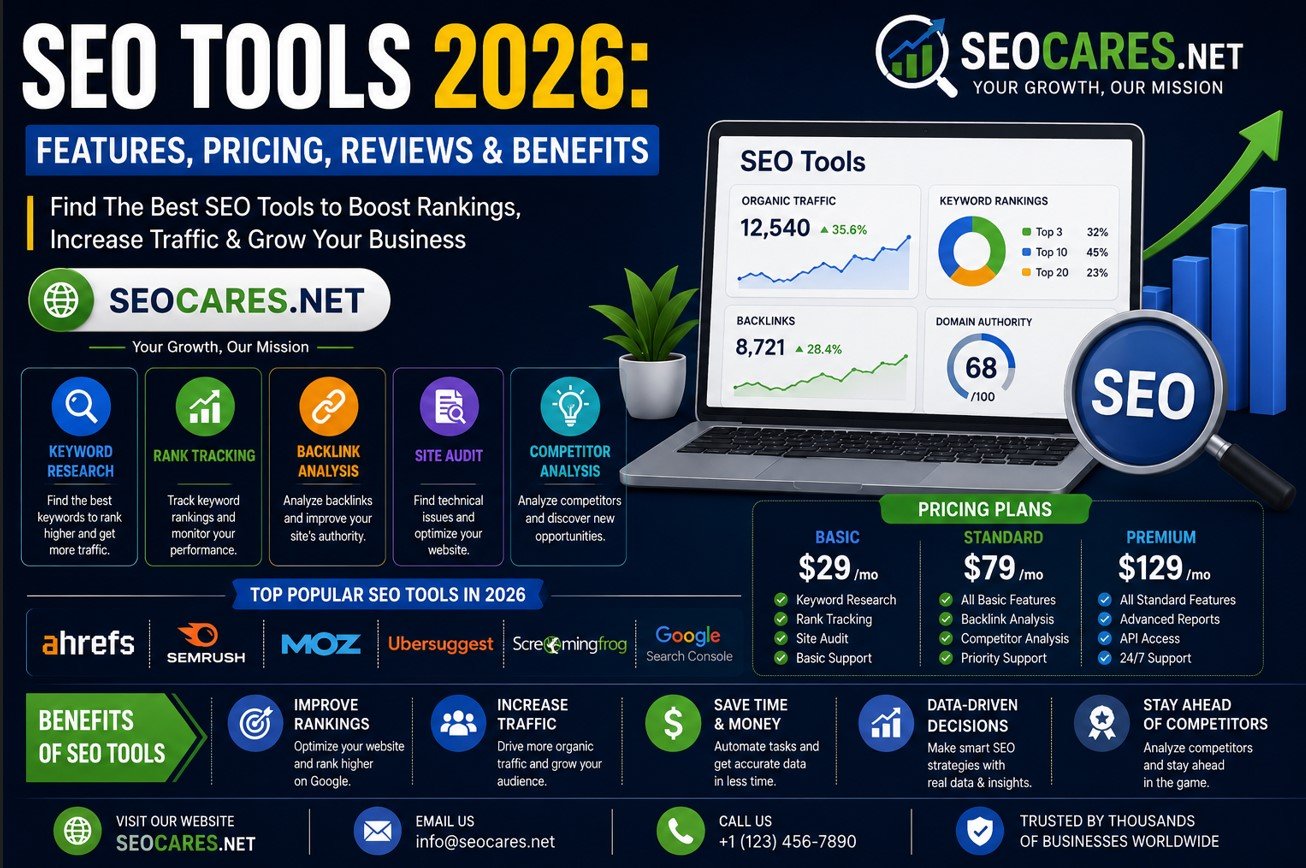
| Tool | Best For | Starting Price | Standout Feature |
| Semrush | All-in-one SEO and marketing | ~$139/month | Massive keyword and backlink database |
| Ahrefs | Backlink analysis and research | ~$129/month | Industry-leading link index |
| Search Atlas | AI-driven execution | Custom pricing | Automated on-page fixes via OTTO |
| Surfer SEO | Content optimization | ~$99/month | Real-time content scoring |
| Screaming Frog | Technical audits | Free / ~$259/year | Deep site crawling |
| Nightwatch | Rank tracking | Entry-level pricing | Daily tracking across 100,000+ locations |
| Moz Pro | Beginner-friendly SEO | ~$99/month | Simple domain authority metrics |
| Google Search Console | First-party performance data | Free | Direct data from Google |
Pricing changes frequently. Always confirm current rates on each vendor’s official site before purchasing.
Detailed Breakdown of the Leading Tools

Semrush
Semrush remains one of the most complete SEO platforms on the market. It covers keyword research, site audits, rank tracking, and competitor analysis in one dashboard. Its database includes billions of keywords and trillions of backlinks, which makes it a strong choice if you want to avoid juggling multiple subscriptions.
Best for: Agencies and businesses that want one tool to handle most SEO tasks.
Ahrefs
Ahrefs built its reputation on backlink data. Its crawler indexes the web constantly, giving users detailed insight into link profiles, referring domains, and anchor text patterns. It also offers solid keyword research and content gap analysis.
Best for: Link building and competitive backlink research.
Search Atlas
Search Atlas has grown into a full-funnel SEO platform, combining research tools with an execution layer called OTTO that pushes on-page fixes automatically. This makes it appealing for teams that want less manual work between diagnosis and implementation.
Best for: Teams that want automation alongside reporting.
Surfer SEO
Surfer focuses on one thing: helping you write content that ranks. It scores your draft against top-performing pages for your target keyword and suggests specific changes to word count, headings, and related terms.
Best for: Writers and content teams optimizing individual articles.
Screaming Frog
Screaming Frog is a desktop crawler that scans your site the way a search engine bot would. It’s a favorite among technical SEOs because it uncovers issues like broken links, missing meta tags, and duplicate content quickly.
Best for: Technical audits on sites of any size.
Nightwatch
Nightwatch specializes in rank tracking. It offers daily updates, granular local tracking across a huge number of locations, and now includes visibility tracking inside AI search tools.
Best for: Agencies and businesses tracking rankings across many locations.
Moz Pro
Moz Pro is known for being approachable. Its Domain Authority metric became an industry standard, and its dashboard is easier to learn than some of the denser platforms on this list.
Best for: Beginners and small business owners new to SEO.
Google Search Console
Search Console is free and gives you data straight from Google, including which queries bring traffic to your site and how your pages perform in search. Its main limitation is that it only shows data for sites you own, so it can’t help with competitor research.
Best for: Every website owner, as a baseline tool alongside a paid platform.
Read More: SEO Tips
Free vs Paid SEO Tools

You don’t need to spend money to get started with SEO. Free tools like Google Search Console and Google Analytics give you real performance data straight from the source. Screaming Frog also offers a free version that crawls up to 500 URLs, which is enough for smaller sites.
That said, free tools have real limits. They generally can’t show you competitor data, large-scale keyword databases, or automated content scoring. If you’re serious about growing organic traffic, a paid tool eventually becomes worth the investment.
A practical approach many experienced marketers use is combining a free baseline (Search Console) with one or two paid specialist tools rather than paying for a single expensive all-in-one platform right away.
How to Choose the Right SEO Tool for Your Needs

Not every business needs the same setup. Here’s how to narrow it down:
- If you’re a solo blogger or small business: Start with Google Search Console and a lightweight tool like Moz Pro or Ubersuggest.
- If you run an agency managing multiple clients: Look at Semrush or Search Atlas for reporting scale, plus Nightwatch for rank tracking.
- If your priority is content quality: Surfer SEO or a similar content-scoring tool will give you the most direct return.
- If you need deep technical audits: Screaming Frog is hard to beat, especially for large sites.
- If backlinks are your focus: Ahrefs remains the strongest choice for link data.
A good rule of thumb: pick tools based on the specific problem you’re trying to solve, not the longest feature list. Most experienced SEOs run three or four focused tools rather than one platform trying to do everything.
Pros and Cons of Using SEO Tools
Pros
- Save hours on manual keyword and competitor research
- Catch technical errors before they hurt rankings
- Track progress with real data instead of guesswork
- Spot content gaps competitors haven’t covered
- Monitor visibility across both traditional and AI search
Cons
- Costs can add up if you subscribe to multiple platforms
- Data accuracy varies between tools and should be cross-checked
- Learning curve for more advanced platforms
- Some tools overwhelm beginners with too many features
- Automated suggestions still require human judgment before publishing
Common Mistakes to Avoid

Relying on one metric.
Domain Authority, Traffic Score, or any single number doesn’t tell the whole story. Look at multiple signals together.
Ignoring Search Console.
Paid tools are useful, but Google’s own data should always be part of your decision-making process.
Chasing every keyword suggestion.
Not every keyword a tool surfaces fits your business or audience. Prioritize relevance over volume.
Skipping technical audits.
Content and backlinks matter, but a slow or broken site can undo all that work.
Treating tool output as final.
SEO software gives you data and suggestions, not guarantees. Human review and strategy still drive results.
Read More: Shopify SEO Tips
Frequently Asked Questions
1. What is the best SEO tool for beginners?
Google Search Console is the best starting point because it’s free and shows real data about your own site. Moz Pro is a good next step for a paid, beginner-friendly option.
2. Do I need more than one SEO tool?
Most experienced marketers use a small stack of two to four tools rather than relying on a single platform, since no tool covers every SEO task equally well.
3. Are free SEO tools good enough for small businesses?
Free tools work well for early-stage sites with limited competition. As traffic and competition grow, paid tools become more valuable for deeper research and automation.
4. How much do SEO tools typically cost?
Entry-level paid plans often start around $99 to $139 per month, with enterprise plans costing significantly more depending on features and usage limits.
5. What’s the difference between Semrush and Ahrefs?
Semrush leans toward all-in-one marketing and SEO management, while Ahrefs is best known for its backlink index and link-building research.
6. Can SEO tools track AI search visibility?
Yes. Several tools now track how often a website is referenced inside AI-generated answers from platforms like ChatGPT, Gemini, and Perplexity, alongside traditional Google rankings.
7. Which SEO tool is best for technical audits?
Screaming Frog is widely used for technical audits because it crawls sites the way search engines do and flags issues like broken links and duplicate content.
8. Is Google Search Console enough on its own?
No. It only shows data for sites you own, so it can’t help with competitor research, keyword discovery, or backlink analysis.
9. What SEO tool works best for content writers?
Surfer SEO is built specifically for content optimization, scoring drafts against top-ranking pages for target keywords.
10. How do I know if an SEO tool’s data is accurate?
Cross-check important metrics against Google Search Console, since it’s the only source pulling data directly from Google itself.
Conclusion
Choosing the right SEO tools comes down to understanding your goals first, then matching software to those specific needs. There’s no single platform that works perfectly for everyone. A solo blogger and a ten-person agency will build very different tool stacks, and that’s exactly how it should work.
Start with the free data you already have access to through Google Search Console. Layer in one or two paid tools that solve your biggest bottleneck, whether that’s content quality, technical health, or backlink growth. As your site and traffic grow, your tool stack can grow with it.
SEO isn’t about owning every tool on the market. It’s about using the right ones consistently, reviewing the data they give you, and making smarter decisions because of it.
Learn More: