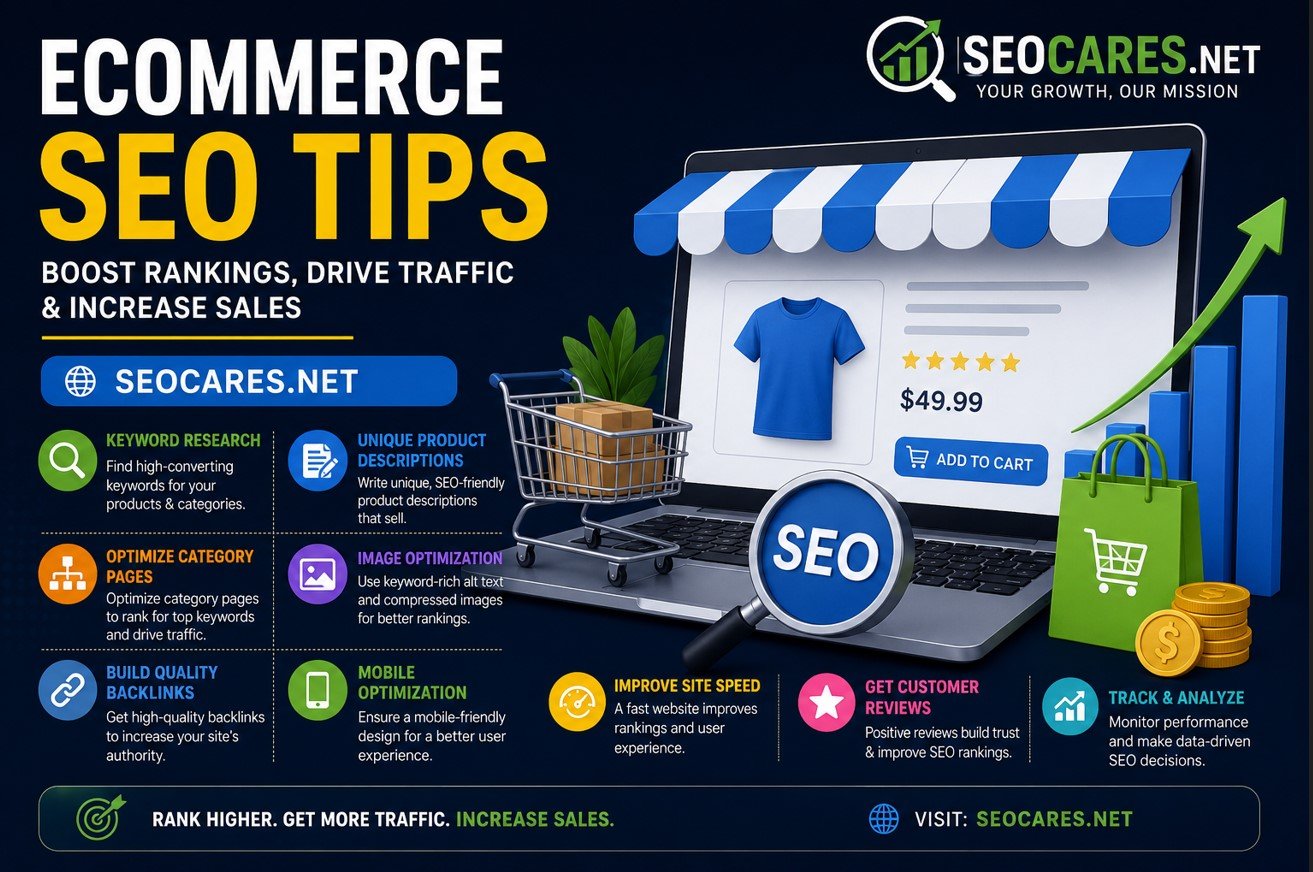
Running an online store is hard enough without wondering why your products never show up on Google. You’ve built a great site, added solid products, and still… nothing. No traffic. No sales. Just silence.
Here’s the truth: most ecommerce sites lose customers before they ever click “Add to Cart.” Why? Because they never showed up in search results in the first place.
Ecommerce SEO isn’t about tricking Google. It’s about making your store easy to find, easy to trust, and easy to buy from. This guide breaks down exactly what works right now, based on real strategies that move the needle for online stores of every size.
By the end of this article, you’ll know how to fix technical issues, write product pages that convert, build the kind of authority Google rewards, and avoid the mistakes that quietly kill rankings.
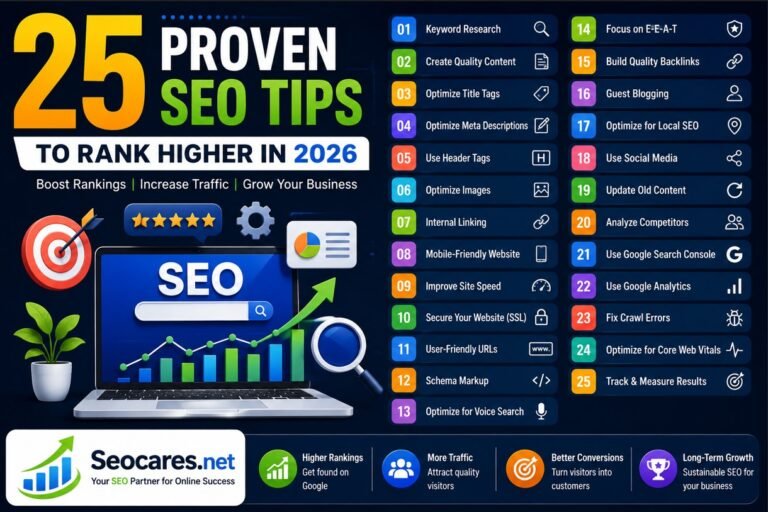
Read More: 25 Proven SEO Tips to Rank Higher in 2026
Let’s get into it.
Why Ecommerce SEO Is Different From Regular SEO
A blog wants readers. A store wants buyers. That single difference changes everything about how you approach search optimization.
Ecommerce SEO deals with challenges most blogs never face:
- Thousands of product pages that can create duplicate content issues
- Filtered and sorted URLs that confuse search engines
- Seasonal inventory that comes and goes
- Competing directly with Amazon and other massive retailers
- Product descriptions that need to sell and rank
Google’s algorithm also treats commercial pages differently. It looks for signals of trust, buyer intent, and real-world credibility, not just keyword matches. That’s why the strategies below focus on both rankings and revenue, not just traffic numbers.
Start With Keyword Research That Matches Buyer Intent

Not all keywords are created equal. Someone searching “what is leather care” is not ready to buy. Someone searching “buy leather wallet men” absolutely is.
Focus on Three Types of Keywords
| Keyword Type | Example | Best Use |
| Transactional | “buy running shoes online” | Product pages |
| Commercial Investigation | “best running shoes for flat feet” | Comparison content, category pages |
| Informational | “how to choose running shoes” | Blog posts, guides |
Transactional keywords should get top priority on your product and category pages. Informational keywords work best in blog content that funnels readers toward those products.
How to Find the Right Keywords
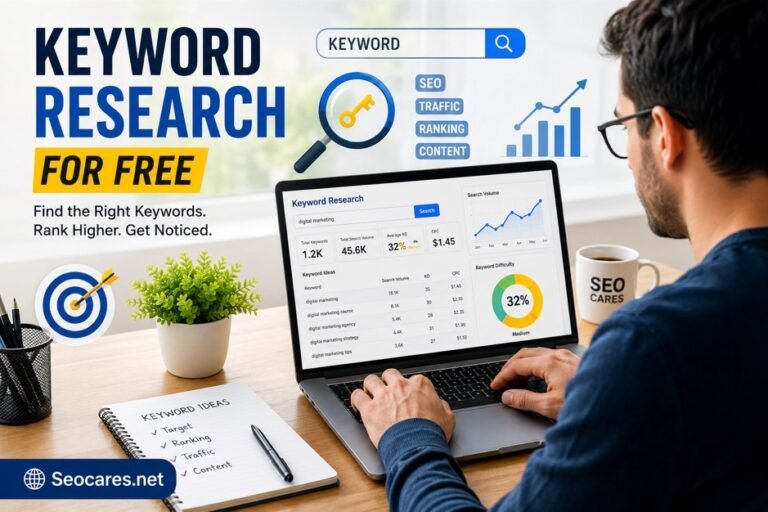
- Use tools like Google Keyword Planner, Ahrefs, or Semrush to check search volume and competition
- Type your product name into Google and study the autocomplete suggestions
- Check the “People also ask” boxes for related questions
- Look at competitor product titles and descriptions for keyword patterns
- Search your own site analytics for terms customers already use to find you
Long-tail keywords (three or more words) usually convert better because they capture shoppers closer to a purchase decision. “Waterproof hiking boots for men size 11” beats “hiking boots” every time when it comes to conversion rate.
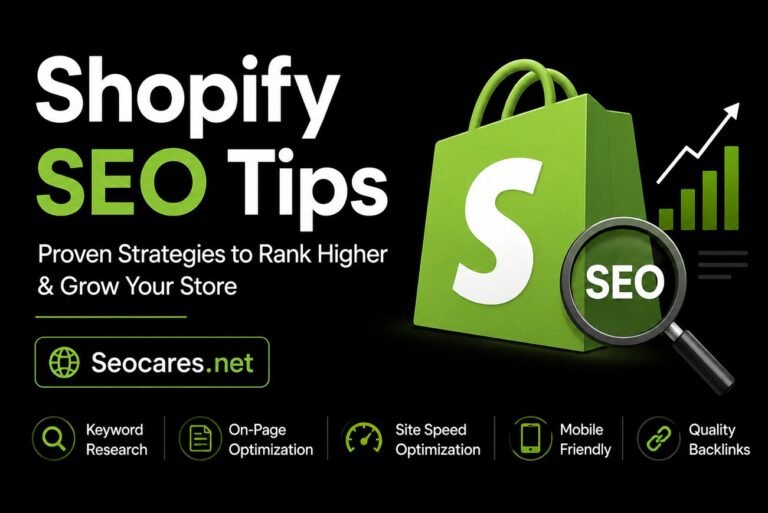
Read More: Shopify SEO Tips
Fix Your Site Structure Before Anything Else

Search engines need a clear path to find and understand your products. A messy structure buries your best pages under layers of confusing navigation.
The Ideal Ecommerce Structure
Homepage
→ Category Page
→ Subcategory Page
→ Product Page
Keep this hierarchy shallow. Every product should be reachable within three clicks from your homepage. The deeper a page sits, the less link authority it receives, and the harder it becomes for Google to crawl.
Practical Structure Tips
- Use breadcrumb navigation on every page so users and search engines understand where they are
- Keep URLs short and descriptive, like /shoes/mens-running-shoes instead of /product?id=48291
- Avoid creating duplicate categories for the same products
- Build an XML sitemap and submit it through Google Search Console
- Use internal linking to connect related products and categories
A clean structure doesn’t just help rankings. It helps real shoppers find what they want faster, which directly reduces bounce rate.
Optimize Product Pages for Search and Sales

Your product page carries the heaviest workload in ecommerce SEO. It needs to rank, load fast, and convert visitors into buyers, all at once.
Write Unique Product Descriptions
Never copy manufacturer descriptions. Thousands of other stores use that exact same text, and Google treats it as duplicate content. Write your own copy that:
- Highlights specific benefits, not just features
- Answers common buyer questions upfront
- Uses natural language that matches how customers actually search
- Includes your target keyword naturally in the first 100 words
Optimize Titles and Meta Descriptions
Your title tag should include the product name, key attribute, and brand when relevant. For example: “Men’s Waterproof Hiking Boots – Size 7-14 | BrandName.”
Meta descriptions won’t directly boost rankings, but they influence click-through rate, which affects performance over time. Keep them under 155 characters and include a reason to click, like free shipping or a limited stock warning.
Use High-Quality Images With Alt Text
Product photos matter for conversions, but they also matter for SEO through image search traffic. Compress images to keep load times fast, and write descriptive alt text like “black leather men’s wallet with card slots” instead of “image1.jpg.”
Add Structured Data
Schema markup helps Google display rich results like star ratings, price, and stock availability directly in search listings. Product schema is one of the highest-impact technical additions you can make, since it increases visibility and click-through rate without requiring a ranking boost.
Show Stock Status and Shipping Details
Shoppers abandon pages when they can’t quickly find shipping costs or availability. Display this information clearly near the top of the page, both for user experience and because it reduces bounce rate, a factor that influences search performance.
Don’t Ignore Category Pages

Many store owners obsess over product pages and forget category pages entirely. That’s a mistake, since category pages often rank for broader, higher-volume keywords.
What Makes a Strong Category Page
- A short introductory paragraph (100-150 words) explaining what the category offers
- Filters and sorting options that don’t create duplicate URLs
- Internal links to top-selling or featured products
- A clear H1 that matches the target keyword, like “Men’s Running Shoes”
Adding even a small amount of unique content to category pages gives search engines more context to understand and rank the page, especially for competitive terms.
Technical SEO Basics Every Store Needs

Technical problems quietly sabotage rankings even when your content is great. Here’s what to check regularly.
Page Speed
Slow sites lose both rankings and sales. Studies consistently show that conversion rates drop sharply for every extra second of load time. Compress images, enable browser caching, and consider a content delivery network (CDN) if your store serves customers across different regions.
Mobile Optimization
Google uses mobile-first indexing, meaning it primarily evaluates the mobile version of your site for rankings. Test your store on multiple screen sizes and make sure buttons, menus, and checkout flows work smoothly on phones.
Fix Duplicate Content Issues
Ecommerce platforms often generate multiple URLs for the same product through filters, sorting, or color variations. Use canonical tags to tell Google which version is the primary one.
Secure Your Site
An SSL certificate (HTTPS) is non-negotiable. It protects customer data and is a confirmed ranking factor. If your store still runs on HTTP, fix that immediately.
Fix Broken Links and Redirects
Discontinued products create dead links that hurt both user experience and crawl efficiency. Set up 301 redirects from removed product pages to a relevant category or replacement product instead of leaving a 404 error.
Click Here: SEO Agency Interamplify
Content Marketing for Ecommerce Stores

Product pages alone rarely rank for broader, informational searches. That’s where content marketing fills the gap.
Content Types That Work for Stores
- Buying guides (“How to Choose the Right Mattress Firmness”)
- Comparison posts (“Memory Foam vs. Spring Mattress”)
- Use-case articles (“Best Gear for Winter Camping”)
- FAQ pages answering common pre-purchase questions
These pages attract shoppers earlier in their journey, then guide them toward relevant products through internal links. Over time, this content also builds topical authority, which strengthens rankings across your entire site, not just individual pages.
Repurpose Content Across Channels
A single buying guide can become an email newsletter, a series of social posts, or a video script. This stretches your content investment further while reinforcing your brand as a trustworthy source.
Build Trust With Reviews and EEAT Signals

Google’s EEAT framework, which stands for Experience, Expertise, Authoritativeness, and Trustworthiness, plays a growing role in how commercial content gets evaluated.
Practical Ways to Strengthen EEAT
- Display verified customer reviews directly on product pages
- Add an About Us page with real information about your business and team
- Include clear contact information, return policies, and shipping terms
- Use author bios on blog content, especially for anything involving expertise (health, finance, safety)
- Showcase any press mentions, certifications, or industry affiliations
Reviews do double duty here. They build trust with shoppers and generate fresh, unique content on product pages, which search engines value.
Link Building Strategies That Work for Online Stores

Backlinks remain one of the strongest ranking signals, but ecommerce link building requires a different approach than blog outreach.
Effective Tactics
- Digital PR: Pitch product roundups or expert commentary to relevant publications
- Supplier and manufacturer links: Ask brands you carry to link to your store as an authorized retailer
- Guest posts: Contribute genuinely useful articles to niche blogs in your industry
- Sponsorships and partnerships: Local events or influencer collaborations often include a backlink
- Resource page outreach: Find “best tools” or “recommended products” pages and pitch your store for inclusion
Avoid buying links in bulk or joining link farms. Google’s algorithms are increasingly effective at detecting manipulative link patterns, and the penalty risk outweighs any short-term gain.
Common Ecommerce SEO Mistakes to Avoid

- Thin product descriptions copied straight from manufacturers
- Ignoring out-of-stock pages instead of redirecting or repurposing them
- Overusing exact-match keywords, which reads as unnatural and risks penalties
- Neglecting internal linking between related products and categories
- Skipping schema markup, missing out on rich snippet opportunities
- Slow checkout pages that increase bounce rate right before conversion
- Forgetting seasonal SEO, like updating holiday collection pages every year instead of deleting them
Each of these seems minor alone, but together they compound into serious ranking and revenue losses.
Tools That Make Ecommerce SEO Easier
| Tool | Best For |
| Google Search Console | Monitoring indexing and search performance |
| Ahrefs / Semrush | Keyword research and competitor analysis |
| Screaming Frog | Technical site audits |
| PageSpeed Insights | Diagnosing speed issues |
| Google Merchant Center | Managing product listings for Shopping results |
Free tools like Google Search Console and PageSpeed Insights cover the essentials. Paid tools become worthwhile once your catalog grows past a few hundred products.
Pros and Cons of DIY vs. Hiring an SEO Expert

DIY Ecommerce SEO
✅ Lower upfront cost ✅ Full control over strategy and timeline ✅ Builds internal SEO knowledge over time
❌ Steep learning curve ❌ Time-consuming, especially for large catalogs ❌ Higher risk of technical mistakes
Hiring an SEO Expert or Agency
✅ Faster results from experienced execution ✅ Access to advanced tools and audits ✅ Frees up time to focus on running the business
❌ Higher cost, especially for ongoing retainers ❌ Requires vetting to avoid low-quality providers ❌ Less hands-on control unless communication is strong
For stores under 100 products, a DIY approach paired with a few consulting hours is often enough. Larger catalogs usually benefit from dedicated expertise.
Frequently Asked Questions
1. How long does ecommerce SEO take to show results?
Most stores see measurable movement within 3 to 6 months, though competitive niches can take longer. SEO is a compounding strategy, not an instant fix.
2. Is ecommerce SEO different from Amazon SEO?
Yes. Amazon SEO focuses on ranking within Amazon’s marketplace algorithm, while ecommerce SEO targets your own website’s visibility on Google and other search engines.
3. Do I need a blog for my online store?
Not strictly, but blog content helps capture informational searches and builds topical authority, which supports rankings across your entire site.
4. How many keywords should one product page target?
Focus on one primary keyword and two or three closely related variations. Trying to target too many dilutes relevance and reads unnaturally.
5. Does site speed really affect ecommerce rankings?
Yes. Speed impacts both search rankings and conversion rates directly, making it one of the highest-priority technical fixes.
6. Should I use canonical tags for filtered product pages?
Yes. Filtered and sorted URLs often duplicate content already on your main category page, and canonical tags prevent that from diluting your rankings.
7. How important are customer reviews for SEO?
Very important. Reviews generate unique content, support EEAT signals, and often trigger rich snippets in search results.
8. What’s the biggest ecommerce SEO mistake small stores make?
Using manufacturer-provided product descriptions instead of writing original copy, which creates duplicate content across many competing sites.
9. Can I do ecommerce SEO without technical knowledge?
Basic optimization like titles, descriptions, and content is accessible to anyone. Technical fixes like schema markup and site speed often require developer support or specialized tools.
10. How often should I update my ecommerce SEO strategy?
Review performance quarterly, and audit technical health at least twice a year, since algorithm updates and site changes can shift what’s working.
Conclusion
Ecommerce SEO isn’t a one-time project. It’s an ongoing process of refining product pages, strengthening technical health, and building the kind of trust that turns browsers into buyers.
Start with the fundamentals: clean site structure, unique product descriptions, and solid technical health. Then layer in content marketing, reviews, and strategic link building to build long-term authority.
The stores that win aren’t always the biggest. They’re the ones that consistently show up where their customers are already searching, and give them a reason to trust and buy.
Apply even three or four strategies from this guide, and you’ll likely notice measurable improvement within a few months. SEO rewards consistency far more than perfection.
Learn More: